Best Honey in India: How to Choose Pure, Raw and Authentic Honey
Quick Answer: What Is the Best Honey in India?
There is no single honey that is objectively the best for every buyer. If you are looking for high-quality honey, compare it based on ingredients, purity, origin, processing, traceability and sourcing rather than relying only on the brand name or words such as “natural” or “premium”.
For a premium honey, look for:
- 100% honey with clear ingredient information
- Defined geographical origin
- Transparent sourcing and traceability
- Raw or minimally processed handling, if that is important to you
- Clear harvest and batch information, where available
- Appropriate authenticity or laboratory testing
- A natural aroma, taste, colour and texture consistent with its source
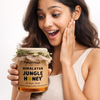
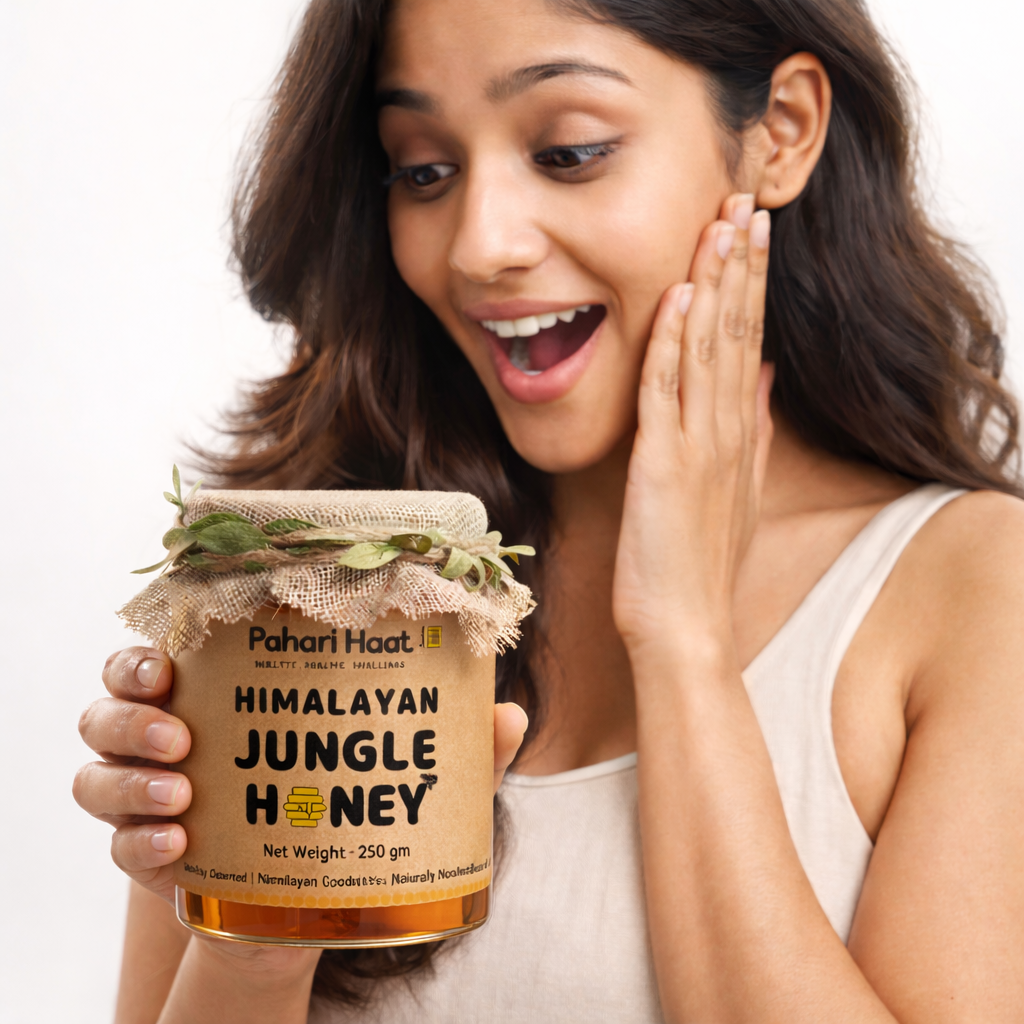
For buyers specifically looking for Himalayan honey, Pahari Haat Himalayan Jungle Honey is sourced from the Shivalik Range of Kumaon, Uttarakhand, with a defined March–April harvest season and a focus on single-origin, single-source and unblended honey.
If you are searching for the best honey in India, the answer is not simply the jar with the highest price, the darkest colour, or the biggest brand name.
Good honey should be evaluated by what it contains, where it comes from, how it is processed, how it is sourced, and how clearly its origin can be traced.
In this guide, we explain how to compare honey in India based on purity, raw processing, origin, traceability, sourcing practices, flavour and value. We also take a closer look at Pahari Haat Himalayan Jungle Honey, sourced from the Himalayan Shivalik Range of Uttarakhand.
What Should You Look for When Buying Honey in India?
The honey market in India includes everything from mass-market processed honey to small-batch, region-specific honey. That makes comparison important.
Before buying, check these seven things.
1. Check the Ingredients
The simplest place to begin is the ingredient list.
If you are looking for honey rather than a honey-based product, the label should clearly identify what is inside the jar.
At Pahari Haat, Himalayan Jungle Honey is positioned as a 100% honey product with no added sweeteners.
For more information about identifying genuine honey, read our detailed guide:
Is Your Honey Real? The Truth About Honey Adulteration in India
2. Look at the Origin
Honey is shaped by its environment.
The plants flowering around an apiary influence the nectar collected by bees, which in turn influences the honey's aroma, taste, colour and character.
A label that simply says "India" provides less information than one that identifies a specific geographical sourcing region.
For example, Pahari Haat Himalayan Jungle Honey is sourced from the Himalayan Shivalik Range of Uttarakhand.
Origin does not automatically prove purity. However, transparent origin gives consumers more information about what they are buying.
3. Understand What "Raw Honey" Means
Raw honey generally refers to honey that has not undergone the same intensive processing used for many commercial honey products.
Processing can include heating, fine filtration and other treatments intended to standardise appearance, texture or shelf stability.
If you specifically prefer minimally processed honey, it is worth checking how the producer handles the honey after extraction.
Read more:
Raw Honey vs Processed Honey: What's Actually Different?
4. Understand "Never Heated" Honey
You may also see honey described as "never heated".
This describes a processing approach rather than proving authenticity on its own.
If this matters to you, look for producers that explain what they mean by the claim rather than relying on the words alone.
Read our detailed explanation:
Never Heated Honey: What It Actually Means
5. Look for Traceability
Traceability is one of the most useful concepts when comparing premium honey.
A traceable honey should give you meaningful information about its journey from source to jar.
This may include:
- Geographical origin
- Source or apiary information
- Harvest season
- Floral environment
- Batch information
- Processing approach
The more specific and verifiable the information, the easier it is for a consumer to understand what they are buying.
6. Consider the Honey's Floral and Regional Character
Honey does not have one universal flavour.
Its sensory profile can change depending on the plants available to bees, season, geography, weather and other environmental factors.
That is why honey from different regions can look and taste completely different.
7. Do Not Judge Honey Only by Colour
Dark honey is not automatically better than light honey.
Light honey is not automatically more pure than dark honey.
Colour is influenced by floral source, geography and other natural factors. It should be considered together with aroma, flavour, texture, origin and processing information.
Pure Honey vs Traceable Honey: Are They the Same?
No.
Purity and provenance answer different questions.
Purity concerns what is actually in the product.
Provenance concerns where the honey came from and how confidently its origin can be traced.
A honey can have a clearly stated geographical origin but still require appropriate testing to establish authenticity.
Likewise, a product can be described as pure honey without giving consumers much information about its geographical source.
For premium honey, both transparency and authenticity matter.
Raw Honey vs Processed Honey
| Factor | Raw / Minimally Processed Honey | More Intensively Processed Honey |
|---|---|---|
| Processing | Generally less intensive | May involve additional processing |
| Heating | May be limited depending on producer | May involve controlled heating |
| Filtration | Can be less intensive | Can be finer |
| Appearance | May vary naturally | Often more standardised |
| Flavour | Can retain more distinctive character | Can be more uniform |
| Consumer priority | Useful for buyers seeking minimally processed honey | Useful for buyers prioritising consistency |
Neither processing category alone proves whether a honey is authentic. The important question is what happened to the honey and whether the producer explains the process clearly.
What Does Single-Origin Honey Mean?
Single-origin honey generally refers to honey associated with a defined geographical origin rather than a product intentionally blended from multiple unrelated origins.
This can provide consumers with more information about provenance.
However, single-origin does not automatically mean single-flower.
A honey can come from one defined geographical region while bees collect nectar from multiple flowering plants within that landscape.
This is why the terms single-origin, single-source, unblended and single-flower should not be treated as interchangeable.
Learn more:
Single-Origin Honey: What It Means, Why It Matters & How It Differs From Blended Honey
Single-Origin vs Single-Flower Honey
| Term | What It Generally Describes |
|---|---|
| Single-origin honey | A defined geographical origin |
| Single-source honey | A defined source or sourcing system |
| Unblended honey | Honey that has not been intentionally blended with honey from unrelated sources |
| Single-flower honey | Honey associated predominantly with a particular floral source |
These terms describe different dimensions of honey provenance. A responsible producer should explain exactly what the claim means.
Why Himalayan Honey Is Different
The Himalayan region contains diverse elevations, climates, forests, farms and flowering plants.
These environmental conditions can contribute to distinctive honey characteristics.
However, "Himalayan honey" should not be treated as a guarantee of purity simply because of the geographical name.
For consumers, the useful questions are:
- Which part of the Himalayas?
- What is the sourcing area?
- When was the honey harvested?
- How was it processed?
- Can the producer explain the source?
- Is the product tested or otherwise supported by appropriate documentation?
In the case of Pahari Haat Himalayan Jungle Honey, the sourcing story centres on the Shivalik Range of Kumaon, Uttarakhand.
Read more:
Raw Honey from Uttarakhand: What Makes Himalayan Honey Different?
What Does Himalayan Jungle Honey Taste Like?
Natural honey does not have a single standard taste profile.
Himalayan Jungle Honey can have a distinctive sensory character influenced by the surrounding floral environment and harvest conditions.
Aroma
Expect a natural floral and honeyed aroma rather than an artificially uniform fragrance.
Taste
The flavour is naturally sweet, with character influenced by the nectar sources available during the harvest.
Appearance
Colour can vary naturally from batch to batch. Variation is not automatically a sign of poor quality.
Texture
Honey may be fluid, thick or crystallised depending on its floral composition, temperature and storage conditions.
Does Honey Crystallisation Mean It Is Pure?
No.
Crystallisation is a natural process that can occur in honey. The speed and extent of crystallisation can vary depending on the honey's floral composition, glucose-to-fructose balance, temperature and other factors.
Therefore, crystallisation should not be used as a standalone purity test.
Likewise, liquid honey is not automatically less authentic.
Read more about evaluating honey authenticity here:
How to Test Honey Purity at Home: What Actually Works?
Can You Test Honey Purity at Home?
You may have seen the popular water test, thumb test, flame test or bread test online.
These methods are widely discussed, but they are not reliable standalone methods for proving honey authenticity.
For serious verification, consumers should rely more heavily on:
- Ingredient transparency
- Producer information
- Traceable sourcing
- Regulatory compliance
- Appropriate laboratory testing
- Credible documentation
Laboratory methods can provide substantially more useful information than viral kitchen tests.
What Is NMR Testing for Honey?
NMR, or Nuclear Magnetic Resonance testing, is one of the analytical approaches used in honey authenticity assessment.
It can be used to examine the chemical profile of honey and compare samples against reference data.
However, no single analytical result should be interpreted without considering the testing method, reference database, sample characteristics and regulatory context.
For consumers, the larger lesson is simple: laboratory evidence is more meaningful than a home experiment when authenticity is genuinely in question.
What Makes Pahari Haat Himalayan Jungle Honey Different?
At Pahari Haat, the focus is not simply on putting the word "Himalayan" on a label.
The product has been developed around a more specific sourcing story.
- Himalayan origin — sourced from the Shivalik Range of Kumaon, Uttarakhand.
- Single origin — a defined geographical sourcing area.
- Single source — a controlled sourcing approach.
- Single harvest — honey associated with a defined harvest.
- Single season — the primary harvest period is March–April.
- Unblended positioning — the honey is not intentionally mixed with unrelated honey sources.
- Unprocessed positioning — the honey is sold without intensive commercial processing.
- Never heated positioning — the product is handled without intentionally heating it as part of routine processing.
- No added sweeteners — the product is positioned as honey rather than a sweetened honey product.
These details are intended to give customers a clearer understanding of what is inside the jar and where it comes from.
From One Landscape to One Jar
For us, the idea behind Himalayan Jungle Honey is simple.
One landscape. One sourcing story. One harvest season. One jar.
That does not mean every jar will look or taste identical.
Natural honey changes with the environment, flowering conditions, weather and season. That variation is part of the character of a minimally processed agricultural product.
How Much Does Good Honey Cost in India?
Honey prices in India vary significantly.
Price can depend on:
- Floral source
- Geographical origin
- Harvest scale
- Processing
- Packaging
- Testing and documentation
- Traceability
- Brand positioning
- Supply-chain costs
A higher price does not automatically prove better quality.
At the same time, extremely low prices may warrant closer attention to sourcing, ingredients and processing.
The better approach is to compare what you are actually getting for the price.
Which Honey Is Right for You?
| If You Care About... | Look For... |
|---|---|
| Minimal processing | Raw or minimally processed honey with a clearly explained process |
| Geographical origin | Clearly identified sourcing region |
| Traceability | Source, harvest and batch information |
| Natural flavour | Honey with a transparent floral and geographical story |
| Unblended honey | A clearly explained single-source or unblended sourcing model |
| Everyday use | A honey whose taste, price and sourcing fit your needs |
| Premium gifting | Well-presented honey with strong provenance and transparent sourcing |
Is Honey Good for Immunity?
Honey is a food that has been traditionally used in many cultures, including as part of warm drinks and home remedies.
However, it is important not to treat honey as a medicine or as a guaranteed way to prevent illness.
If you use honey as part of your everyday diet, choose a product whose ingredients, sourcing and processing you understand.
Read more:
Honey for Immunity: Benefits, Daily Uses & How to Choose
Can Honey Help With Weight Loss?
Honey contains sugars and calories, so replacing sugar with honey does not make a food calorie-free.
If you are managing body weight, the overall dietary pattern and total energy intake matter much more than simply changing one sweetener.
Honey can be used in moderation as a natural sweetener, but it should not be presented as a guaranteed weight-loss ingredient.
Read more:
Honey for Weight Loss: Truth, Myths & How to Use It
Can Raw Honey Be Used on Skin?
Honey has a long history of traditional topical use and is used in a variety of cosmetic and personal-care formulations.
However, not every honey product is intended for use on the skin, and raw food honey should not automatically be treated as a medical or cosmetic treatment.
If you are considering topical use, check the intended product use and patch-test appropriately.
Read more:
Honey for Skin: Uses, Precautions & What to Know
Honey with Warm Water: Is It a Good Way to Use Honey?
Honey is commonly mixed into warm beverages.
If you enjoy honey with warm water, the main consideration is how much honey you are consuming and how it fits into your overall diet.
Very hot water is not necessary simply to consume honey.
Read more:
Honey with Warm Water: How to Use It
The Story Behind Our Honey
For Pahari Haat, Himalayan Jungle Honey is not simply another product on a shelf.
It is connected to the work of understanding rural landscapes, farmers, beekeepers and the natural resources of Uttarakhand.
Our sourcing journey has involved travelling through the region, speaking with people on the ground and understanding how honey moves from the landscape to the consumer.
That journey is part of why we place so much emphasis on provenance and transparency.
Read the full story: Two Years, Hundreds of Kilometers, and One Swollen Eye
Natural Honey vs Traceable Honey
The word "natural" sounds reassuring, but it does not tell you everything you need to know.
When buying premium honey, ask more specific questions.
- Where did the honey come from?
- What is the source?
- When was it harvested?
- Was it blended?
- Was it heated?
- How was it filtered?
- What testing supports the product?
- Who produced and packed it?
These questions turn a vague marketing claim into something much more meaningful: traceability.
Best Honey in India: A Simple Buying Checklist
Before buying a jar of honey, use this checklist:
- Check the ingredient list.
- Look for a clearly stated origin.
- Understand whether the honey is raw or processed.
- Check what "never heated" or similar processing claims actually mean.
- Look for sourcing and traceability information.
- Do not judge quality by colour alone.
- Do not use crystallisation as a standalone purity test.
- Do not rely on viral home purity tests.
- Look for appropriate testing and documentation where relevant.
- Compare the product's sourcing story with its price.
So, What Is the Best Honey in India?
If by "best honey" you mean the honey that offers the clearest combination of transparent sourcing, defined origin, appropriate processing, natural character and useful product information, then those are the qualities worth comparing.
For buyers specifically looking for a Himalayan honey with a defined sourcing story, Pahari Haat Himalayan Jungle Honey is one product to consider.
It is sourced from the Shivalik Range of Kumaon, Uttarakhand, with a defined March–April harvest season and a focus on single-origin, single-source, unblended and minimally processed honey.
But the most important principle is bigger than any one brand:
Do not buy honey only because a label says "pure", "natural", "premium" or "Himalayan". Understand the story behind the jar.
Frequently Asked Questions About the Best Honey in India
Which is the best honey in India?
There is no single honey that is objectively best for every consumer. When comparing honey, look at ingredients, origin, sourcing, processing, traceability, testing and value.
Which honey is best for daily use?
A honey with transparent ingredients, reliable sourcing and a taste you enjoy can be suitable for everyday use. The appropriate quantity depends on your overall diet.
Is raw honey better than processed honey?
Raw or minimally processed honey may appeal to consumers who want less intensive processing. However, "raw" by itself does not prove authenticity or purity.
Is Himalayan honey better than regular honey?
Himalayan honey is associated with a distinctive geographical environment, but geographical origin alone does not prove that a honey is purer or better. Look at the complete sourcing and processing story.
What is single-origin honey?
Single-origin honey generally refers to honey associated with a defined geographical origin. It should not automatically be confused with single-flower honey.
Does crystallised honey mean it is pure?
No. Crystallisation is a natural characteristic of many honeys and should not be used as a standalone authenticity test.
How can I know if honey is pure?
Home tests such as water, flame and thumb tests are not reliable standalone methods. Look at the ingredient list, sourcing information, producer transparency, regulatory compliance and appropriate laboratory testing.
What does never heated honey mean?
It generally describes honey that has not been intentionally heated as part of its routine processing. Consumers should check how the producer defines and handles the claim.
Is dark honey better than light honey?
No. Honey colour varies naturally according to floral source, geography and other factors. Colour alone does not establish quality.
Does Pahari Haat Himalayan Jungle Honey come from Uttarakhand?
Yes. Pahari Haat Himalayan Jungle Honey is sourced from the Himalayan Shivalik Range of Kumaon, Uttarakhand.
Explore Our Honey Guides
- How to Choose Pure Honey in India
- Single-Origin Honey: What It Means & Why It Matters
- Raw Honey vs Processed Honey
- Never Heated Honey: What It Means
- Raw Honey from Uttarakhand
- How to Test Honey Purity at Home
- Honey Adulteration in India
About the Author
Gaurav Agarwal is the founder of Pahari Haat and Kartavya Karma, a social enterprise working with Himalayan communities, rural producers and traditional products from Uttarakhand.
Through Pahari Haat, the focus is on connecting Himalayan produce and traditional knowledge with conscious consumers while creating greater value at the source.
Last reviewed: September 2026
-
Posted in
Authentic Honey, Best Honey in India 2026, Best Pure Honey in India, Best Raw Honey in India, Himalayan Honey, Himalayan Honey India, himalayan-wellness, Honey Adulteration, Honey from Uttarakhand, Honey Provenance, Honey Purity, Honey Traceability, Natural Honey, Never Heated Honey, Pahari Haat, Pure Honey, Pure Honey India, Raw Honey, Raw Honey vs Processed Honey, Single Origin Honey, Single Source Honey, Unblended Honey, Uttarakhand Honey