Single-Origin Honey: What It Means, Why It Matters & How It Differs From Blended Honey
Written by Gaurav Agarwal, Founder, Pahari Haat
Last updated: September 2026
When you buy honey, the label may tell you that it is pure, natural, raw, Himalayan or unprocessed.
But there is another question worth asking:
Where did this honey actually come from?
Was it collected from a defined geographical area?
Can the source be identified?
Was it harvested during a particular season?
Was it kept separate from honey from other sources?
And can the producer explain its journey from the apiary to the jar?
These questions are at the heart of single-origin honey.
For Pahari Haat, single-origin honey means preserving a clear connection between the honey and its place, source and harvest.
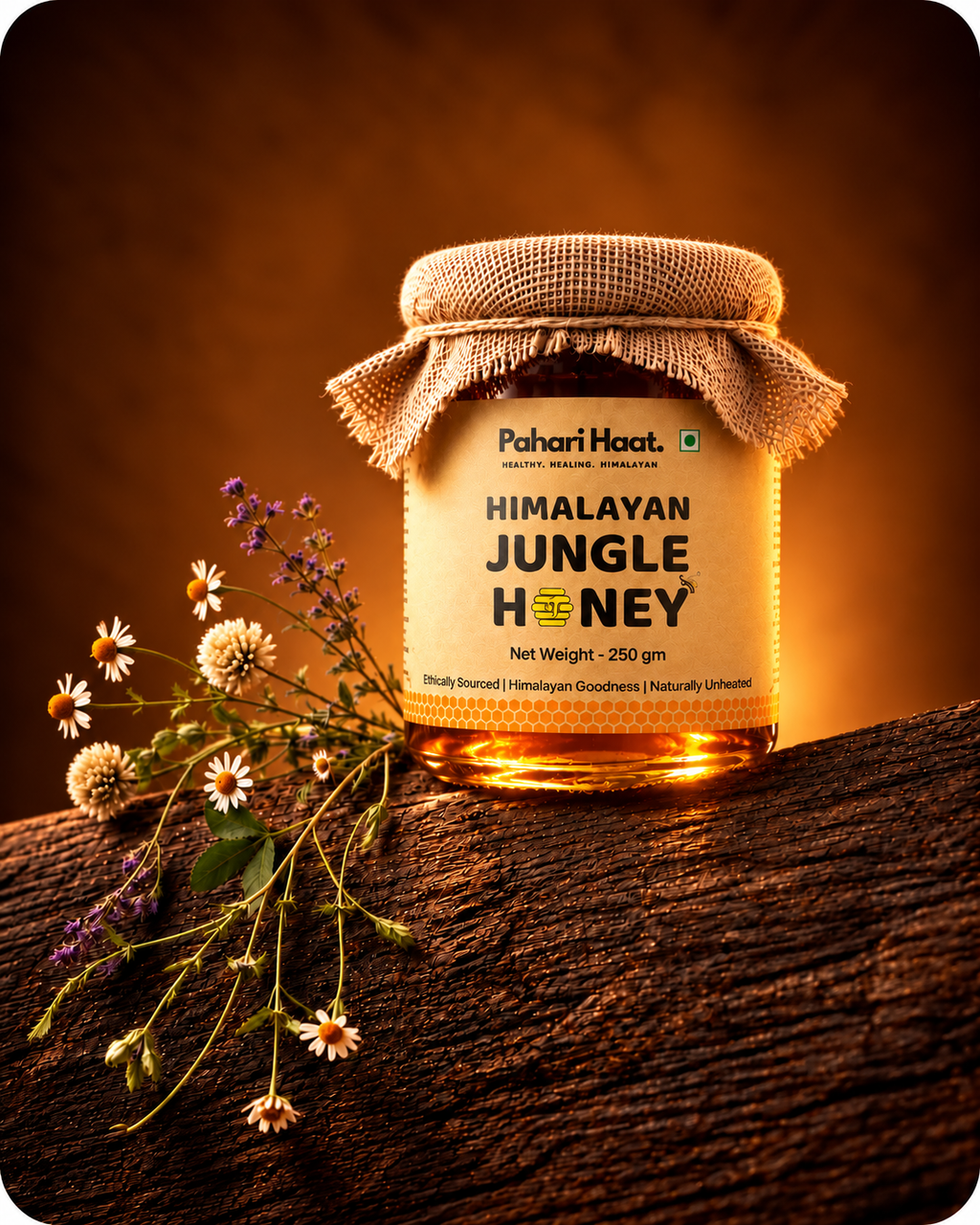
Our Himalayan Jungle Honey comes from the Shivalik Range of Kumaon, Uttarakhand. It is associated with a defined apiary and its surrounding foraging landscape, harvested during the March–April season, kept unblended, and handled as raw, minimally strained and never deliberately heated.
In simple terms:
One landscape. One source. One season. One identifiable honey story.
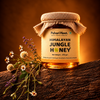
Himalayan Jungle Honey
Single-Origin • Single-Source • Unblended • Single Season • Never Heated
250g
₹510
Pan-India Delivery Included
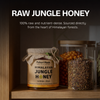
Raw Himalayan Jungle Honey sourced from the Shivalik Range, Kumaon, Uttarakhand — harvested during the March–April season and kept unblended and never deliberately heated.
SHOP NOW →
What Is Single-Origin Honey?
Single-origin honey is honey associated with a defined geographical origin rather than being presented as an unspecified mixture from multiple geographical sources.
The idea is simple:
Single-origin honey has a place behind it.
Honey is naturally connected to its surrounding environment.
Bees collect nectar from flowering plants available around their colony. The local vegetation, season, weather and landscape can therefore contribute to the natural characteristics of the resulting honey.
This means honey from different places can naturally differ in:
-
colour
-
aroma
-
flavour
-
viscosity
-
crystallisation behaviour
-
floral character
Single-origin sourcing allows that geographical identity to remain part of the product story.
Single-Origin vs Single-Source vs Unblended Honey
These terms are related, but they describe different things.
Single-Origin Honey
Single-origin describes the geographical identity of the honey.
It answers:
Where does the honey come from?
For Pahari Haat Himalayan Jungle Honey, the stated geographical origin is the Shivalik Range of Kumaon, Uttarakhand.
Single-Source Honey
Single-source describes the defined sourcing point or production source associated with the honey.
It answers:
What defined source does this honey come from?
For our honey, this refers to a defined apiary and its surrounding foraging landscape.
Unblended Honey
Unblended describes how honey from different sources or harvests is handled.
It answers:
Has this honey been mixed with unrelated honey from other sources or harvests?
Our Himalayan Jungle Honey is kept unblended.
Single-Season Honey
A single-season approach identifies the period in which a particular harvest was collected.
For our Himalayan Jungle Honey:
Harvest season: March–April
These terms therefore describe different parts of the same provenance story:
Origin → Source → Season → Harvest → Handling
Why Does the Origin of Honey Matter?
Honey is not produced from a fixed industrial recipe.
Bees collect nectar from the flowering resources available in their surrounding environment. That environment changes according to geography, season and weather.
As a result, honey from different landscapes can naturally develop different characteristics.
The purpose of identifying the origin is not to suggest that one geographical region automatically produces “better” honey.
It is to give the honey an identity and provenance.
A statement such as:
Shivalik Range, Kumaon, Uttarakhand
tells you considerably more about origin than simply:
Indian Honey
Where Does Pahari Haat Himalayan Jungle Honey Come From?
Pahari Haat Himalayan Jungle Honey is sourced from the:
Shivalik Range · Kumaon · Uttarakhand
The honey is associated with a defined apiary and the surrounding foraging landscape.
We believe geographical specificity matters because the word “Himalayan” by itself covers an enormous geographical area.
The Himalayas include different:
-
elevations
-
climates
-
forests
-
flowering environments
-
agricultural landscapes
-
seasons
So instead of stopping at the word Himalayan, we identify the region more specifically:
Shivalik Range
Kumaon
Uttarakhand
That is the geographical identity behind our Himalayan Jungle Honey.
What Does Single-Source Honey Mean?
Knowing the state where honey comes from is useful.
Knowing the defined source gives you another layer of information.
Our honey is associated with a defined apiary and its surrounding foraging landscape.
The bees naturally forage in the landscape around their colony, return to the hive and contribute nectar from the available flowering environment to the honey produced there.
This does not mean that every bee collects nectar from one particular flower.
And it does not mean that every drop of honey comes from a single plant.
Single-source does not mean single-flower.
It refers to the defined sourcing origin behind the honey.
Understanding the Honey Bee Foraging Zone
A jar of honey represents thousands of bee foraging journeys.
Bees leave their colony, search for available nectar and return to the apiary.
Honey bees commonly forage within a few kilometres of their colony, although the actual distance can vary depending on:
-
forage availability
-
season
-
weather
-
landscape
-
flowering density
For our sourcing story, the typical foraging zone is approximately 2.5–3 km around the apiary.
This is an approximate sourcing context, not a hard boundary.
A bee can travel farther when necessary.
The important point is that the honey is associated with a defined apiary and its surrounding floral landscape rather than being presented as an anonymous mixture from an unspecified network of locations.
2.5–3 km is an approximate typical foraging zone — not a “bee cannot fly farther” boundary.
Why the Foraging Landscape Matters
A bee does not collect “Himalayan honey.”
It collects:
Nectar from flowers.
That nectar comes from the plants available in its environment.
This is why the surrounding landscape matters.
The bees interact with their environment.
They visit flowering plants.
They collect nectar.
They return to the colony.
And through the natural process of honey production, that floral environment contributes to the eventual character of the honey.
This is also why honey from different places can naturally taste different.
Why March–April Matters
Honey has a seasonal identity.
Flowering changes throughout the year.
Nectar availability changes.
Weather changes.
Temperature changes.
Bee activity changes.
Our Himalayan Jungle Honey is associated with the:
March–April harvest season
That gives the honey another layer of identity:
Where: Shivalik Range, Kumaon, Uttarakhand
Source: Defined apiary and surrounding foraging landscape
When: March–April
A single-season approach also allows the identity of a particular harvest to remain distinct rather than automatically combining it with unrelated harvest periods.
One season. One harvest story.
What Does Unblended Honey Mean?
One of the most important parts of our sourcing approach is:
Unblended
Honey can be blended from different sources, regions or harvests.
Blending is not automatically an indication of poor-quality honey. It is a sourcing and production approach that can create greater consistency between batches.
But when different sources are combined, the individual identity of those sources becomes less distinct.
Pahari Haat Himalayan Jungle Honey is kept unblended.
The intention is simple:
Preserve the identity of the individual harvest rather than dilute it by mixing it with unrelated honey sources.
Our separate guide on Unblended, Single-Source & Single-Origin Honey explores this sourcing philosophy in greater detail.
Why Can Single-Origin Honey Vary From Batch to Batch?
Single-origin does not mean every jar must look exactly the same.
Natural honey can vary according to:
-
floral sources
-
season
-
weather
-
nectar composition
-
temperature
-
storage conditions
You may notice differences in:
Colour
Honey can naturally range from lighter to darker shades.
Aroma
Floral environments can contribute different aromatic characteristics.
Flavour
Honey may be floral, earthy, herbal, mild or more pronounced.
Texture
Honey viscosity changes with temperature and composition.
Crystallisation
Some honey crystallises sooner than other honey.
These differences do not automatically indicate a problem.
Natural variation can be part of honey's identity.
Does Single-Origin Honey Mean Single-Flower Honey?
No.
This is an important distinction.
Single-origin describes the geographical origin of the honey.
It does not necessarily mean that bees collected nectar from only one flower species.
Bees naturally forage on available flowering resources around their colony.
Therefore:
Single-origin ≠ single-flower
A honey can be associated with one geographical origin while containing nectar from multiple flowering plants.
Single-Origin Honey Does Not Automatically Mean Pure Honey
Another important distinction:
Origin and purity are not the same thing.
Single-origin tells you something about where the honey comes from.
It does not, by itself, prove:
-
authenticity
-
absence of adulteration
-
laboratory composition
-
processing history
-
every quality parameter
That is why provenance should be considered alongside other information.
When evaluating a honey, look at:
Origin
Ingredients
Processing
Source
Blending
Traceability
Quality controls
Single-origin is one important part of the story — not a substitute for every other quality check.
Single-Origin Honey vs Blended Honey
| Feature | Single-Origin Honey | Blended Honey |
|---|---|---|
| Geographical identity | Defined origin | May involve multiple origins |
| Source identity | Can be associated with a defined sourcing area | May involve multiple sources |
| Seasonal identity | Can preserve an individual harvest identity | May combine different harvests |
| Flavour | Natural variation can remain | Often designed for greater consistency |
| Provenance | More specific geographical story | May have broader provenance |
| Batch identity | Can remain more distinct | Multiple sources may be combined |
The important point is not that one model is automatically better.
They are different sourcing approaches.
Single-origin emphasises geographical identity and provenance.
Blending can be used to combine different honeys and achieve a more consistent product.
Raw & Never Heated: What Happens After Harvest?
Origin tells you:
Where did the honey come from?
Processing tells you:
What happened to it afterwards?
Pahari Haat Himalayan Jungle Honey is positioned as:
Raw
Minimally strained
Never deliberately heated
Our basic handling approach is:
Harvest → Minimal Straining → Packing
Minimal straining is intended to remove unwanted physical material such as wax and debris before packing.
For a deeper explanation of raw and processed honey, see our dedicated article:
Raw Honey vs Processed Honey in India
What Does “Never Heated” Mean?
“Never heated” describes a processing practice.
For Pahari Haat Himalayan Jungle Honey, it means we do not deliberately heat the honey as part of our processing approach.
This distinction matters because terms such as:
-
raw
-
unprocessed
-
minimally processed
-
never heated
-
cold processed
can be used differently by different producers.
A useful product page should therefore explain what the brand actually means rather than relying only on a marketing phrase.
Is Raw Honey Automatically Pure Honey?
Not necessarily.
These are two different concepts.
Raw describes how honey is handled or processed.
Pure describes what is actually present in the product.
So consumers should look beyond a single word on the label.
Ask:
Where did it come from?
Was anything added?
Was it blended?
How was it processed?
Can the brand explain its supply chain?
For a deeper discussion, see our guide:
How to Choose Pure Honey in India
Why Kitchen Honey Tests Aren't Enough
Water tests, flame tests and other home methods are widely shared online as honey “purity tests.”
However, no single home test can conclusively establish honey authenticity.
A more useful approach is to examine the complete product story:
Origin
Where was it sourced?
Ingredients
What does the product contain?
Processing
How was it handled?
Source
Can the producer explain where it came from?
Traceability
Can the journey from source to jar be explained?
This is why home observations should not be treated as laboratory authentication.
For more detail, see:
How to Test Honey Purity at Home
Why Provenance Matters Alongside Purity
A jar can simply say:
100% Pure Honey
But that tells you only one part of the story.
Compare that with a product that also explains:
Origin: Shivalik Range, Kumaon, Uttarakhand
Source: Defined apiary
Harvest: March–April
Blending: Unblended
Processing: Raw, minimally strained
Heating: Never deliberately heated
The second description gives the consumer considerably more information about the product's identity and sourcing.
Purity matters. Provenance matters too.
Why Himalayan Jungle Honey Is Different
“Himalayan” should not be treated as a magic word.
It is a geographical description.
What matters is what sits behind it.
For Pahari Haat Himalayan Jungle Honey, the sourcing story is:
Origin
Shivalik Range, Kumaon, Uttarakhand.
Source
Defined apiary and surrounding foraging landscape.
Typical Foraging Zone
Approximately 2.5–3 km around the apiary, subject to natural variation.
Season
March–April.
Blending
Unblended.
Processing
Raw and minimally strained.
Heating
Never deliberately heated.
That level of specificity is what gives the honey its provenance.
Pahari Haat Himalayan Jungle Honey: Sourcing Standard
| Attribute | Pahari Haat Himalayan Jungle Honey |
|---|---|
| Origin | Shivalik Range, Kumaon, Uttarakhand |
| Source | Defined apiary |
| Foraging landscape | Approx. 2.5–3 km typical zone |
| Harvest season | March–April |
| Blending | Unblended |
| Processing | Raw, minimally strained |
| Heating | Never deliberately heated |
| Honey character | Himalayan wildflower / multiflora |
This is the framework we use to explain the provenance of our honey.
Not one isolated claim.
A chain of traceability.
What Does Single-Origin Honey Taste Like?
There is no single flavour that defines single-origin honey.
The sensory character depends on the landscape, flowering environment, season and harvest.
For Pahari Haat Himalayan Jungle Honey:
Aroma
Naturally floral with a warm, honeyed character.
Taste
Sweet with a layered floral character influenced by the surrounding flowering environment.
Appearance
Amber to dark amber, with natural variation between harvests.
Texture
Naturally viscous, with texture changing according to temperature and crystallisation.
The goal is not to manufacture exactly the same sensory profile every year.
It is to preserve the natural character of the honey and its harvest.
Why Natural Variation Is Part of the Story
A naturally sourced honey does not need to look identical from one harvest to another.
You may see differences in:
Colour
Aroma
Flavour
Viscosity
Crystallisation
These differences can occur naturally.
The important point is to understand the reason for variation rather than assuming that visual uniformity is the only sign of quality.
How to Identify a Credible Single-Origin Honey
When buying single-origin honey, don't rely only on the words “single origin” printed on the label.
Ask the producer:
1. What is the geographical origin?
Is it a specific region, district, valley or landscape?
2. What does “single-source” mean?
Does it refer to an apiary, beekeeper, sourcing area or another defined source?
3. What is the harvest season?
Can the producer identify when the honey was harvested?
4. Is the honey blended?
Ask whether honey from different sources or unrelated harvests is combined.
5. How is it processed?
Understand what the producer means by raw, strained, filtered or unprocessed.
6. Can the producer explain the sourcing journey?
A credible provenance story should contain actual information rather than only adjectives such as premium, natural or pure.
Single-Origin Honey: A Simple Provenance Checklist
Before buying, ask these seven questions:
1. Where?
What is the geographical origin?
2. From what source?
Can the source be identified?
3. When?
What season or period was it harvested?
4. Blended?
Has it been mixed with unrelated honey?
5. Processed how?
What happened after harvest?
6. Heated?
Was deliberate heat treatment used?
7. Can the story be explained?
Can the producer tell you how the honey travelled from source to jar?
If the answers are clear, you have a much better understanding of the honey's provenance.
From Landscape to Jar
The Pahari Haat sourcing story can be understood simply:
01 — LANDSCAPE
The apiary is associated with the Shivalik landscape of Kumaon.
↓
02 — FORAGING
Bees naturally forage on available flowering resources around the colony.
↓
03 — HARVEST
Honey is harvested during the March–April season.
↓
04 — HANDLING
The honey is kept unblended and minimally strained.
↓
05 — PACKING
The honey is packed without deliberate heat processing.
↓
06 — JAR
The final product retains a connection to its stated sourcing landscape and harvest.
One landscape. One harvest story. One identifiable origin.
Natural Is Not the Same as Traceable
“Natural” is a broad description.
Traceability is more specific.
A useful honey provenance story should answer:
Where?
When?
From which source?
Was it blended?
How was it processed?
Was it deliberately heated?
The more clearly these questions can be answered, the easier it is for a consumer to understand the product they are buying.
For us, that is why the conversation around premium honey begins with:
Provenance.
Why We Use the Words Single-Origin, Single-Source & Unblended
For Pahari Haat, these aren't three different marketing slogans.
They describe three connected parts of the sourcing story:
SINGLE-ORIGIN
A defined geographical identity.
Shivalik Range, Kumaon, Uttarakhand
SINGLE-SOURCE
A defined apiary and surrounding foraging landscape.
UNBLENDED
The honey is kept separate from unrelated honey sources and harvests.
Together, they give the consumer a clearer picture of where the honey comes from and how its identity is maintained.
How to Use Himalayan Jungle Honey
Single-origin honey can be used in everyday food and beverage routines.
Try it:
-
over breakfast
-
with oats
-
with fruit
-
in homemade dressings
-
in warm beverages
-
in traditional recipes
If using honey in a warm beverage, use warm rather than boiling-hot water if you specifically want to avoid unnecessary heat exposure.
For more information about the traditional practice of honey with warm water, see our dedicated guide:
Honey with Warm Water: Benefits, the Right Time & How Much to Take
What About Honey for Immunity, Weight Loss or Skin?
Honey is widely used as a food and in traditional wellness practices.
However, this article is about honey provenance, not medical treatment.
Honey should be understood primarily as a food, and it should not be presented as a replacement for medical care.
For specific topics, see our separate guides:
Honey for Immunity in India
Honey for Weight Loss in India
Raw Honey for Skin, Acne & Hair
Keeping these subjects in separate articles also allows each guide to focus properly on its own topic.
Frequently Asked Questions About Single-Origin Honey
What is single-origin honey?
Single-origin honey is honey associated with a defined geographical origin rather than being presented as an unspecified mixture from multiple geographical regions.
What does single-source honey mean?
Single-source honey refers to honey associated with a defined production or sourcing source. The exact meaning should be explained by the producer.
Is single-origin honey the same as single-flower honey?
No. Single-origin refers to geographical provenance. Single-flower or monofloral honey refers to a particular floral source.