Is Your Honey Real? The Truth About Honey Adulteration in India
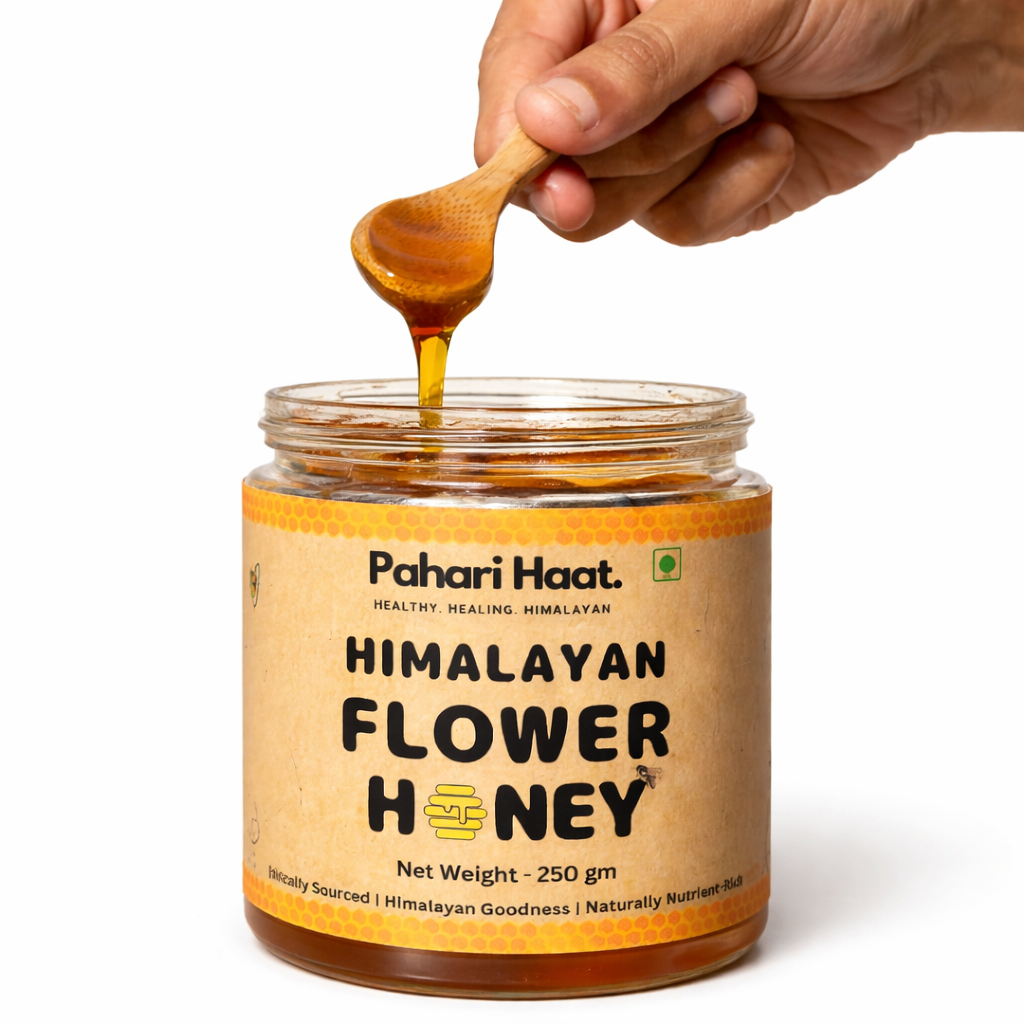
Honey is one of the most adulterated foods in India.
Not the cheap local variety. Not some obscure unbranded product. We are talking about bottles with professional labels, premium pricing and confident purity claims — sold in supermarkets, health stores and e-commerce platforms across the country.
If you have ever bought a well-known honey brand from a modern retail shelf and believed it was genuinely raw and pure — this blog is for you.
What Does "Adulterated Honey" Actually Mean?
Adulteration in honey does not always mean something dangerous has been added to it.
In most cases it means one or more of the following:
Sugar syrup blending — Cheap sugar syrups, including rice syrup, corn syrup and modified invert sugar, are mixed into honey to increase volume and reduce cost. Modern syrups are specifically engineered to be chemically similar to honey and are extremely difficult to detect.
Artificial feeding of bees — Bees are fed sugar syrup during and after harvest periods so they produce more "honey" faster. The resulting product is technically made by bees but has almost none of the nutritional complexity of genuine wild or forest honey.
Ultra-processing — Genuine honey is heated to high temperatures and ultra-filtered to remove pollen, propolis and natural particles. This gives it a clear, uniform appearance and a long shelf life — but destroys most of the enzymes, antioxidants and medicinal properties that make honey valuable.
Anonymous blending — Honey from multiple anonymous sources, often imported in bulk, is blended and repackaged under domestic brand names with vague sourcing claims.
The result is a product that looks like honey, tastes like honey, passes mandatory regulatory tests — and is sold at a premium — but delivers almost none of the genuine health benefits of real raw honey.
Why Does This Keep Happening?
The answer is straightforward — economics and regulation gaps.
Genuine raw honey is difficult and expensive to produce. Wild forest honey requires skilled local harvesters, ethical collection practices, careful handling and short supply chains. None of this is cheap.
Industrial honey production, on the other hand, is highly scalable. Large commercial brands process hundreds of tones monthly. At that scale and at Indian retail price points — typically ₹200 to ₹400 for 500g — the margins simply do not support genuine raw honey.
The regulatory gap makes this worse. Standard mandatory testing in India — prescribed by FSSAI — cannot reliably detect modern adulteration methods, particularly modified sugar syrups engineered specifically to pass these tests.
Advanced testing methods like Nuclear Magnetic Resonance (NMR) testing — the international gold standard for honey purity — are currently mandatory only for honey meant for export. Honey sold to Indian consumers does not require NMR testing.
This means a honey product can pass every mandatory domestic regulatory test and still be significantly adulterated by international purity standards.
Can You Test Honey Purity at Home?
Honestly — not reliably.
Popular home tests circulating online — the water test, thumb test, flame test, bread test — are not scientifically validated methods for detecting modern honey adulteration.
Advanced sugar syrups engineered to mimic honey will pass most of these tests easily.
The only method that reliably detects adulteration today is NMR (Nuclear Magnetic Resonance) testing — a laboratory process unavailable to consumers.
The most practical protection is not a home test. It is knowing exactly who made your honey, where it came from, and what was done to it before it reached you.
What Real Raw Honey Looks and Tastes Like
If your only reference point for honey is what you have bought from a supermarket shelf, real raw honey may surprise you.
Appearance: Raw honey is not perfectly clear or uniformly golden. Depending on season and floral source it can range from pale yellow to dark amber, with a naturally opaque or cloudy quality. Wild forest honey is often dark and richly coloured.
Texture: Real raw honey is dense and viscous. It moves slowly. Forest honey and jungle honey often have a thick, almost chewy texture that is completely unlike processed commercial honey.
Crystallization: Raw honey crystallizes. This is not spoilage — it is chemistry. Genuine honey contains natural sugars, including glucose, that crystallize at room temperature over weeks or months. You can liquefy crystallized honey by placing the jar in warm water. Never microwave or boil it — this destroys active enzymes.
Taste: Raw honey has complexity. Wild and forest varieties have distinct, sometimes intense flavour notes — floral, woody, tangy, or mildly bitter — depending on the flowers the bees visited. The uniform mild sweetness of commercial honey is a product of blending and processing, not nature.
Aroma: Open a jar of genuine raw honey and you will notice a living, complex aroma — faintly floral, earthy and warm. Heavily processed honey has almost no aroma.
What to Look for When Buying Honey in India
Given the widespread adulteration problem, here is what genuinely matters when choosing honey:
Sourcing transparency — Can the brand tell you exactly where the honey comes from? Which forests, which region, which season? Vague claims like "pure Himalayan honey" with no specific sourcing information are a red flag.
Processing disclosure — Is the honey raw? Has it been heated? Has it been filtered beyond basic straining to remove debris? Brands with nothing to hide will tell you exactly what they do and do not do to their honey.
Colour and appearance — If the honey looks perfectly clear and uniformly golden in every batch across every season, it has been processed. Nature does not work that way.
Price — Genuine raw honey, ethically sourced and minimally processed, cannot be produced and sold profitably at ₹200 to ₹250 for 500g. If the price seems too good to be true for "premium raw honey," it almost certainly is.
Crystallization — A brand that tells you crystallization is natural and explains why it happens is being honest with you. A brand that guarantees permanently liquid, clear honey is guaranteeing you a processed product.
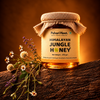
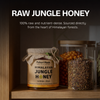
Pahari Haat Himalayan Jungle Honey — Why It Is Different
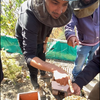
At Pahari Haat, our honey comes from wild Himalayan jungle hives — collected by skilled local harvesters from deep forest areas away from agricultural land and pesticide exposure.
We do not heat it. We do not ultra-filter it. We do not blend it with anonymous sources.
What leaves the hive goes through basic straining to remove debris and wax — and goes directly into your jar. Nothing more.
Our honey crystallizes. It varies slightly in colour, aroma and flavour from batch to batch — because seasons change, forests change and bees visit different flowers at different times of year. This is not inconsistency. This is proof.
We grade and sort our honey at our Kasar Devi, Almora facility — where every batch is checked before it reaches you.
Our promise is simple: 100% raw. Never heated. Never processed in any way.
This is the honey our own families eat. It is the only standard we know how to work to.
Frequently Asked Questions
Is all commercial honey in India adulterated?
Not necessarily all — but independent research and consumer investigations have consistently found that a significant portion of commercially sold honey in India fails advanced purity testing. The safest approach is to buy from brands with full sourcing transparency and a clear raw processing commitment.
What is NMR testing and why does it matter?
Nuclear Magnetic Resonance testing is the most advanced method currently available for detecting honey adulteration — including modern modified sugar syrups that standard tests cannot identify. It is mandatory for honey exported from India but not currently required for honey sold domestically.
Why does real honey crystallize?
Honey is a supersaturated sugar solution. Over time, glucose naturally separates and forms crystals — especially in cooler temperatures. Crystallization is a sign of genuine, unprocessed honey. It does not mean the honey has spoiled or gone bad.
Is dark honey better than light honey?
Not necessarily better — but different. Darker honey varieties, including wild jungle and forest honey, typically have higher antioxidant content and more complex flavour profiles. Lighter honey is not inferior — both are valuable depending on floral source and region.
How should I store raw honey?
Store in a cool, dry place away from direct sunlight. A sealed glass jar at room temperature is ideal. Do not refrigerate — cold accelerates crystallization. Do not microwave or heat directly — this damages active enzymes. Raw honey has an indefinite shelf life when stored correctly.
What is the difference between raw honey and organic honey?
Raw honey means unheated and minimally processed — the enzymes, pollen and natural compounds are intact. Organic honey means the bees foraged from certified organic areas. A honey can be raw but not organic, or organic but still processed. Ideally, look for honey that is both raw and sourced from clean, pesticide-free foraging areas.
Pahari Haat sources and sells 100% raw Himalayan Jungle Honey — never heated, never processed. Shop Pahari Haat Honey →
Complete guide: Best Honey in India 2026 — Complete Buyer's Guide →