Masala Chai Without Acidity — Why Most Chai Upsets Your Stomach (And How to Fix It)
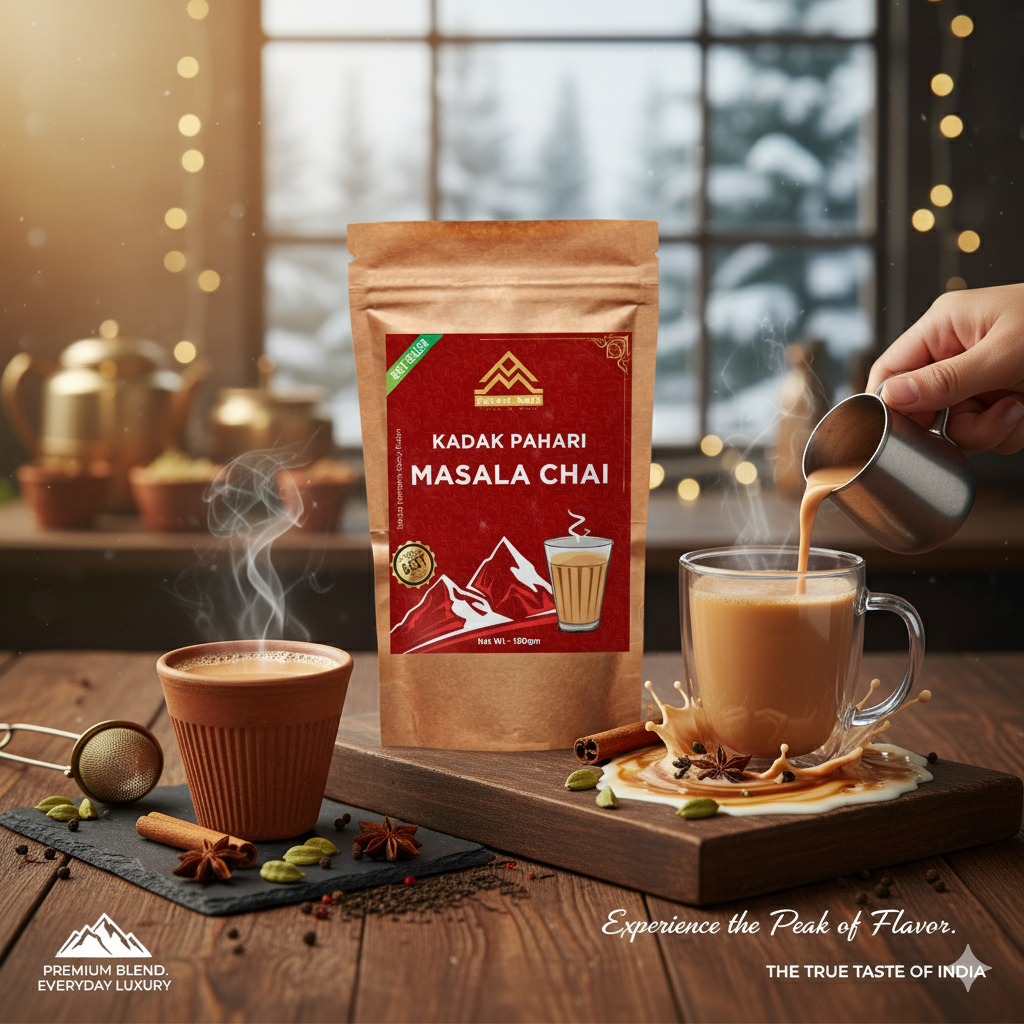
Quick Answer: Yes, most masala chai causes acidity — strong CTC tea produces stomach acid, and standard 5–6 spice blends lack digestive herbs to counteract it. The fix is not to stop drinking chai. The fix is to drink a masala chai that is specifically blended with digestive herbs like mulethi, ajwain and fennel — which neutralize acidity before it starts. Kadak Pahari Masala Chai by Pahari Haat is formulated exactly this way.
Every chai lover in India knows the feeling.
You brew a strong, aromatic cup of masala chai. The first sip is perfect — warm, spiced, deeply satisfying. By mid-morning, your chest burns, your stomach feels heavy, and you tell yourself you need to cut down on chai.
But you never do. Because chai is not just a drink. It is a ritual, a comfort, a part of who you are.
The problem is not chai itself. The problem is what is — and is not — in your masala chai blend.
Why Most Masala Chai Causes Acidity
There are three reasons standard masala chai causes acidity:
1. Strong CTC Tea Is Inherently Acidic
The base of any masala chai is CTC black tea — and CTC tea is naturally acidic. It contains tannins that stimulate stomach acid production. On an empty stomach, this acid has nothing to work on and irritates the stomach lining directly. Done daily for years, this is how occasional acidity becomes chronic gastritis.
2. Standard Spice Blends Lack Digestive Herbs
Most commercial masala chai blends use the same 5–6 spices: cardamom, ginger, cinnamon, cloves, black pepper. These spices add flavour and warmth — but none of them are specifically alkaline or digestive-calming. In fact, black pepper and ginger in excess can irritate the stomach lining further in sensitive individuals.
What is missing from standard blends is the traditional Pahadi wisdom — digestive herbs like mulethi, ajwain and fennel that were always part of authentic mountain chai recipes precisely because they prevent the acidity that strong tea creates.
3. The Milk Buffer Is Not Enough
Many chai drinkers believe milk in chai prevents acidity. Milk does buffer some acid — but not enough to cancel the effect of tannins from strong CTC tea, especially when brewed kadak. The result is a net acidic experience that the standard masala chai blend cannot prevent.
The Herbs That Actually Prevent Masala Chai Acidity
Traditional Pahadi masala chai recipes solved this problem centuries ago. Mountain communities who drank multiple cups of strong chai daily — in cold climates, with active physical lives — could not afford a chai that caused acidity. So their recipes included specific digestive and alkaline herbs that commercial brands have never adopted.
Here are the three most important:
Mulethi — Licorice Root
Mulethi is naturally alkaline — it works directly against the acidity of CTC tea. It soothes the stomach lining, prevents acid reflux, and adds a natural sweetness that reduces the need for excess sugar. In traditional Ayurvedic practice, mulethi has been used for centuries as a stomach-calming herb. It is the single most important anti-acidity ingredient missing from standard masala chai.
Want to understand every herb in this blend in detail? Read: 20 Herbs in Masala Chai — What Each One Does for Your Body →
For the complete brand comparison and rankings, read our Best Masala Chai in India 2026 guide →
Ajwain — Carom Seeds
Ajwain is one of the most powerful digestive herbs in Indian traditional medicine. It prevents bloating, reduces gas, and supports smooth digestion. When combined with strong CTC tea, ajwain counteracts the heaviness and bloating that acidic chai causes. It is a staple in Pahadi cooking precisely because mountain diets are heavy and warming — ajwain keeps digestion moving.
Fennel — Saunf
Fennel is cooling and carminative — it reduces stomach inflammation and prevents the burning sensation that acidic chai leaves in the throat and chest. Combined with ajwain, fennel creates a digestive protection layer that allows you to drink strong, kadak chai without the aftermath.
Why Kadak Pahari Masala Chai Does Not Cause Acidity
Kadak Pahari Masala Chai by Pahari Haat was formulated following a traditional Uttarakhand recipe that includes all three of these digestive herbs — mulethi, ajwain and fennel — alongside 17 other Himalayan herbs and spices.
The result is a masala chai that delivers the full kadak strength of Upper Assam CTC tea — strong, rich, deeply satisfying — without the acidity that follows.
This is not a claim made for marketing. It is the result of a traditional recipe that Pahadi communities trusted for generations — a recipe where digestive balance was built into the blend from the beginning, not added as an afterthought.
The 20 herbs and spices in Kadak Pahari Masala Chai include:
Cardamom, black pepper, mulethi (licorice root), ginger, cinnamon, bay leaf, clove, fennel, ajwain, long pepper (pipli), star anise, javitri (mace), cumin, fenugreek, tulsi, nutmeg, turmeric, flaxseed, brahmi and ashwagandha.
The bold three are your anti-acidity shield. The rest deliver flavour, warmth, immunity and wellness benefits that no standard masala chai can match.
How to Brew Masala Chai Without Acidity
Even with a well-blended masala chai, brewing technique matters. Here is how to get the most flavour with the least acidity:
- Never brew on an empty stomach. Have a small snack — even a biscuit — before your first cup. Your stomach lining needs something to work with before acid production begins.
- Simmer, do not boil aggressively. Aggressive boiling extracts more tannins from tea leaves faster, increasing acidity. Gentle simmering on low flame extracts flavour without excess tannin release.
- Use full-fat milk. Full-fat milk provides a stronger acid buffer than low-fat alternatives. It coats the stomach lining and absorbs more of the tannin-driven acidity.
- Use jaggery instead of refined sugar. Refined sugar causes an insulin spike followed by a crash — compounding the acid feeling. Jaggery is alkaline, digests slowly, and pairs beautifully with the earthy spice notes of a 20-herb blend.
- Limit to 2 cups daily. Even the best-blended masala chai is caffeinated. Two cups delivers the full wellness and flavour benefit. Beyond that, caffeine accumulation increases acid production regardless of spice balance.
Masala Chai Acidity vs Herbal Tea — Which Is Right for You?
| Factor | Standard Masala Chai | Kadak Pahari Masala Chai | Herbal Tea |
|---|---|---|---|
| Caffeine | High | High | None |
| Acidity risk | High | Low — mulethi, ajwain, fennel | None |
| Digestive herbs | None | 3 dedicated digestive herbs | Varies |
| Spice count | 5–6 | 20 | Varies |
| Best for | Everyday habit | Daily kadak chai without acidity | Evening, wellness, caffeine-free |
| Wellness depth | Low | High | High |
If acidity is your primary concern and you want to eliminate caffeine entirely, Pahari Haat's Himalayan herbal teas — chamomile lavender, nettle, immuni-tea — are caffeine-free and completely non-acidic. But if you love your kadak chai and simply want to stop the acidity, the answer is a better-blended masala chai — not giving up chai altogether.
Frequently Asked Questions
Does masala chai cause acidity?
Yes, most standard masala chai causes acidity because strong CTC tea produces stomach acid and standard 5–6 spice blends lack digestive herbs to counteract it. A masala chai blended with mulethi, ajwain and fennel — like Kadak Pahari Masala Chai — is specifically formulated to prevent this.
Which masala chai does not cause acidity?
Kadak Pahari Masala Chai by Pahari Haat is blended with mulethi (licorice root), ajwain and fennel — three traditional Pahadi digestive herbs that neutralise the acidity of strong CTC tea. It is the only masala chai in India formulated with this level of digestive protection built into the blend.
Why does chai cause acidity in the morning?
Drinking masala chai on an empty stomach means the tannins and caffeine in CTC tea have nothing to work on except your stomach lining — causing acid irritation. Always have a small snack before your morning chai, and choose a blend with digestive herbs like mulethi and ajwain.
What is mulethi and why does it prevent acidity in chai?
Mulethi is licorice root — a naturally alkaline herb used in Ayurvedic medicine for centuries to soothe the stomach lining and prevent acid reflux. When added to masala chai, it directly counteracts the acidity of CTC black tea, allowing you to drink strong, kadak chai without the burning aftermath.
Is masala chai bad for the stomach?
Standard masala chai can be hard on the stomach — particularly when consumed on an empty stomach or in large quantities. However, a masala chai blended with traditional digestive herbs like mulethi, ajwain, fennel and cumin supports digestion rather than disrupting it. The problem is not chai — it is what is missing from most chai blends.
Can I drink masala chai daily without acidity?
Yes — if you choose the right blend. Kadak Pahari Masala Chai is designed for daily consumption. Its 20-herb blend including mulethi, ajwain and fennel provides built-in digestive protection. Limit to 2 cups daily, brew on a gentle simmer, and have a small snack before your first cup.
What spices in masala chai help with digestion?
Mulethi (licorice root), ajwain (carom seeds), fennel (saunf) and cumin are the most effective digestive spices in masala chai. Together they prevent bloating, reduce acid reflux, soothe the stomach lining, and support smooth digestion. Standard commercial chai blends do not include these — they are found in traditional Pahadi recipes like Kadak Pahari Masala Chai.
Where can I buy masala chai without acidity in India?
Kadak Pahari Masala Chai by Pahari Haat is available at paharihaat.in — ships pan-India. WhatsApp: +91-9625689172.
-
Posted in
acidity free chai, ajwain chai benefits, best masala chai india, chai acidity fix, digestive masala chai, does masala chai cause acidity, himalayan masala chai, kadak chai acidity, kadak pahari masala chai, masala chai acidity, masala chai benefits, masala chai digestive herbs, masala chai stomach problem, masala chai without acidity, mulethi in chai