How to Test Honey Purity at Home: 7 Easy Methods Every Indian Must Know
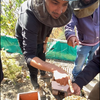
By Gaurav Agarwal, Founder, Pahari Haat — sourcing raw Himalayan honey directly from wild Kumaon beekeepers since 2024
Published: March 2026 | Last reviewed: April 2026
Quick Answer: To test honey purity at home, use these 7 methods together — never rely on just one:
1. Water Test — pour 1 tbsp honey into a glass of room temperature water. Pure honey sinks and stays intact at the bottom. Adulterated honey dissolves or clouds the water immediately.
2. Thumb Test — place a small drop on your thumb. Pure honey stays as a compact drop and does not spread or run. Adulterated honey spreads and feels thin.
3. Flame Test — dip a dry matchstick tip in honey and strike it. Pure honey lights easily due to low moisture. Adulterated honey resists ignition or sputters.
4. Blot Test — place a drop on tissue paper. Pure honey does not soak through or leave a wet mark. Adulterated honey soaks the paper immediately.
5. Crystallisation Test — genuine raw honey crystallises naturally within weeks to months at room temperature. Honey that stays perfectly liquid for 6+ months has likely been heated or adulterated.
6. Vinegar Test — mix 1 tsp honey in water, add 2–3 drops of vinegar. Pure honey shows no reaction. Adulterated honey foams or froths.
7. Taste and Aroma Test — pure honey has a rich, complex, layered aroma and a mild throat-catch when swallowed raw. Flat, overly sweet, or syrupy taste without complexity indicates adulteration.
Important: No home test is 100% foolproof. Modern adulterants like rice syrup can pass visual tests. Use at least 3 tests together. The only guaranteed method is NMR lab testing.
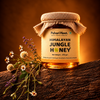
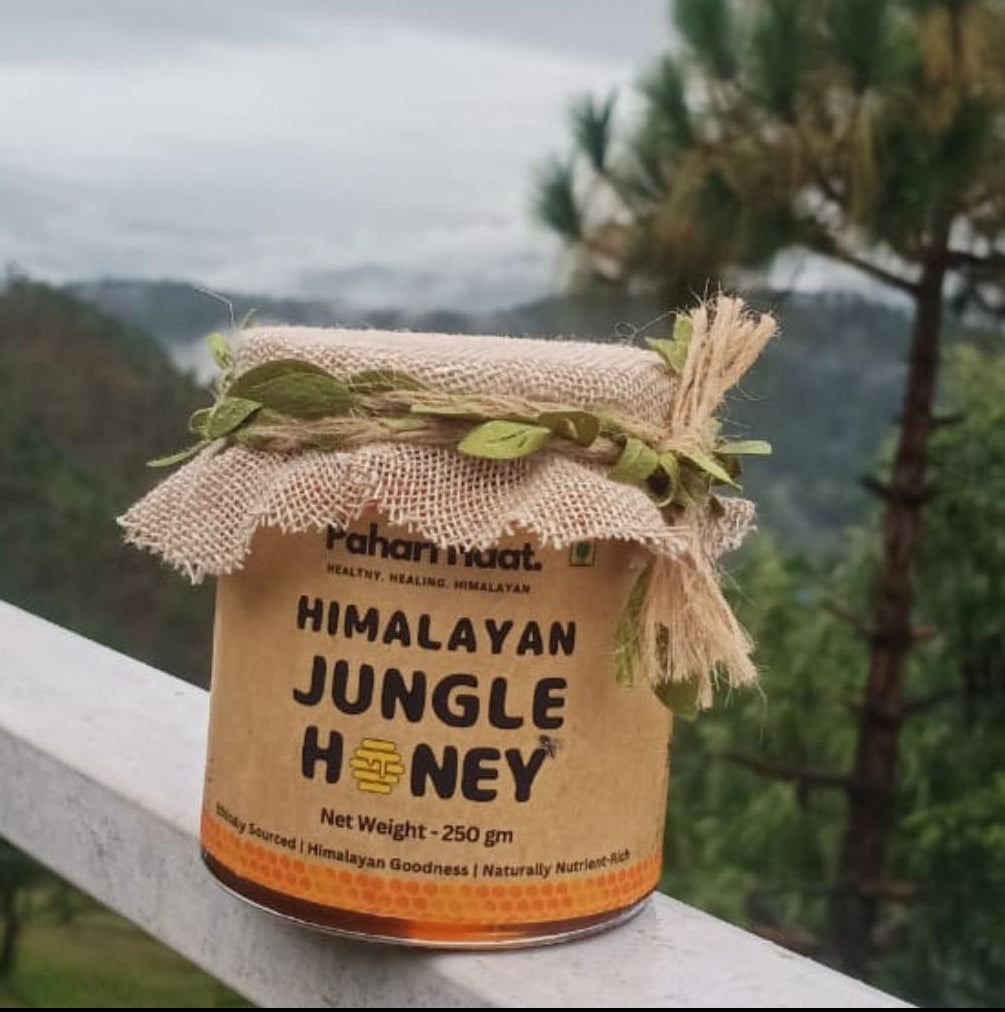
For pure honey without the guesswork — Pahari Haat Himalayan Jungle Honey is sourced directly from wild beekeepers in Kumaon, Uttarakhand. Never heated. Never adulterated. Crystallises naturally in every jar — proof you can see yourself. Among the best honey options in India for daily use.
Know more — How to Choose Pure Honey in India: 7 Things to Check →
Shop 100% Pure Himalayan Jungle Honey — Pahari Haat →
Here's something that should make every Indian honey buyer stop and think.
According to food safety experts, honey is the third most commonly faked food product in the world — right behind milk and olive oil.
And in India? The problem is even more acute. 77% of honey in Indian markets is adulterated with sugar syrup.
That golden jar sitting in your kitchen right now — the one you've been adding to your morning water, stirring into your chai, giving to your children for immunity — there is a very real chance it contains more sugar syrup than actual honey.
This is not fear-mongering. This is the documented reality of India's honey market.
At Pahari Haat, we source and sell 100% raw, unprocessed Himalayan Jungle Honey — and we believe every Indian deserves to know exactly how to verify what they are buying. Even from us.
Here are 7 home tests you can do right now — with things already in your kitchen.
Why Is Honey Adulteration So Common in India?
Before the tests, understanding the problem helps you appreciate why testing matters.
The demand for honey has skyrocketed — thanks to its popularity as a natural sweetener and health booster. However, natural honey production is limited, and meeting market demands through ethical beekeeping alone is not always profitable. This gap has led to widespread honey adulteration, where producers mix cheap additives like rice syrup, High Fructose Corn Syrup (HFCS), invert sugar, and liquid glucose to increase volume and reduce costs.
The most common adulterants used in honey in India are cane sugar syrup, high fructose corn syrup, inverted sugar syrup, corn sugar syrup, molasses, and liquid glucose.
These adulterants not only degrade the nutritional value of honey but also pose health risks — particularly for diabetics and those consuming honey specifically for its medicinal properties.
The problem is compounded by one uncomfortable truth: since there is no remarkable physical difference between pure and adulterated honey, it becomes extremely difficult to assess the purity of honey without testing. That is exactly why you need these tests.
Before You Test: 3 Visual Checks First
Before any active testing, your eyes and nose can already tell you a lot.
Check 1 — Colour: Honey colour varies depending on floral source — wildflower honey ranges from pale gold to dark amber, while buckwheat honey is near-brown. Neither light nor dark colour alone indicates adulteration — but unnaturally uniform, bright golden colour year-round can indicate heavy processing and blending.
Check 2 — Viscosity: Pure honey is thick — it flows slowly and heavily when you tilt the jar. Adulterated honey moves faster and feels thin or watery. Tilt your jar slowly — thin, watery honey is a warning sign.
Check 3 — Label: Start with the label before any physical test. Look for "100% pure" or "Raw Honey." Avoid products listing added sugar, high fructose corn syrup, or artificial ingredients. Ingredients should say one thing only: honey.
Test 1: The Water Test — Most Popular
What you need: A clear glass, water, 1 tablespoon honey
How to do it: Fill a clear glass with room temperature water and slowly pour a tablespoon of honey into it. Watch carefully what happens next.
Pure honey will sink straight to the bottom of the glass, forming a distinct layer without immediately mixing with the water — it maintains its structure and settles as a cohesive mass. Adulterated honey tends to dissolve quickly or create cloudy streams as it mixes with water.
What pure honey does: Sinks to the bottom as a solid clump — does not dissolve immediately.
What fake honey does: Dissolves quickly, creates cloudy streaks, mixes into the water.
⚠️ Important limitation: Thick adulterants like inverted sugar syrup and liquid glucose can also sink in water and appear pure. Do not rely on this test alone.
Reliability: ★★★☆☆ — Use as one of several tests, not standalone.
Test 2: The Thumb Test — Quickest
What you need: Your thumb, 1 small drop of honey
How to do it: Place a small amount of honey on your thumb. Pure honey stays intact and does not spread. When rubbed between fingers — feels smooth, not sticky.
What pure honey does: Stays as a small, compact, slightly firm drop. Does not run or spread immediately.
What fake honey does: Spreads and runs immediately. Feels sticky when rubbed between fingers.
⚠️ Note: In hot weather, even pure honey may spread slightly — do this test at room temperature (20–25°C) for accurate results.
Reliability: ★★★★☆ — One of the more reliable quick tests.
Test 3: The Flame Test — Most Dramatic
What you need: A dry matchstick, honey
How to do it: Take a completely dry matchstick. Dip the tip in honey — ensure it is well-coated. Shake off excess honey. Try to strike and light it.
Pure honey is flammable due to its low moisture content. Adulterated honey with added water or sugar syrups has higher moisture content and will not ignite easily.
What pure honey does: The matchstick lights relatively easily — the honey coating burns.
What fake honey does: Does not light, makes a fizzing or sputtering sound due to excess moisture.
⚠️ Safety: Do this carefully near a flame-safe surface. Keep away from children.
Reliability: ★★★☆☆ — Good indicator of moisture content, not conclusive alone.
Test 4: The Blot Test — Paper/Cloth Method
What you need: Blotting paper, tissue paper, or white cloth — 1 teaspoon honey
How to do it: Place a few drops of honey on tissue or blotting paper. Pure honey won't immediately soak into the paper or leave a wet ring. Adulterated honey contains excess water or thin syrups that quickly soak into paper, leaving visible wet spots.
What pure honey does: Sits on the surface. May be absorbed very slowly but does not create a wet ring or water stain around it.
What fake honey does: Soaks into the paper quickly, leaving a visible wet halo or water ring around the drop.
Reliability: ★★★☆☆ — Better with tissue paper than blotting paper.
Test 5: The Crystallisation Test — Most Reliable Long-Term
What you need: Your honey jar — and patience (days to weeks)
How to do it: Simply observe your honey jar over time — days, weeks, or months.
Pure honey is a supersaturated sugar solution — over time, natural glucose forms crystals and makes honey thick or solid. Honey that stays perfectly liquid for months or years has likely been heat-processed. Natural crystallisation creates a somewhat uniform, granular texture. The colour often lightens slightly during crystallisation.
What pure honey does: Crystallises naturally within weeks to months — forming a uniform, granular, creamy texture.
What fake honey does: Remains perfectly liquid for months and years without any crystallisation. Or crystallises in strange, uneven patterns.
⚠️ Important: Many Indians mistake crystallisation for spoilage. Crystallisation is not spoilage — it is the clearest sign of genuine raw honey. To reliquefy, place the jar in warm water below 50°C for 15–20 minutes. Never microwave.
Reliability: ★★★★★ — The single most reliable natural purity indicator over time.
Test 6: The Vinegar Test — Checks for Adulterants
What you need: White vinegar, water, 1 tablespoon honey
How to do it: Mix 2 tablespoons white vinegar in 100ml water. Add 1 tablespoon honey. Stir gently and observe for 30–60 seconds.
What pure honey does: No foaming, no bubbling. The mixture remains calm.
What fake honey does: Foaming or bubbling indicates the presence of certain adulterants that react with the acidity of vinegar.
⚠️ Limitation: This test is effective for detecting certain types of adulteration — it does not detect all adulterant types. Use alongside other tests.
Reliability: ★★★☆☆ — Good supporting test, not conclusive alone.
Test 7: The Taste and Aroma Test — Most Underused
What you need: Your senses — and knowledge of what real honey tastes like
This is the most underused test — and one of the most informative.
What pure honey tastes like: Natural, complex sweetness — not one-dimensional sugar sweetness. Distinct floral or earthy notes depending on floral source. Slight warmth or tingle in the throat after swallowing. Taste fades relatively quickly — not a heavy, cloying sugar taste that lingers.
What fake honey tastes like: Flat, one-dimensional sweetness — like sugar syrup. No floral complexity. No throat warmth. Heavy, cloying sweetness that lingers artificially.
Aroma test: Open the jar and smell before tasting. Pure raw honey has a distinct, complex floral-earthy aroma. Adulterated honey often smells faintly of caramel or is nearly odourless.
Reliability: ★★★★☆ — Highly reliable once you know what real honey smells and tastes like.
7 Tests — Quick Reference Table
| Test | What you need | Time | Reliability |
|---|---|---|---|
| Water Test | Glass + water | 1 minute | ★★★☆☆ |
| Thumb Test | Your thumb | 30 seconds | ★★★★☆ |
| Flame Test | Matchstick | 2 minutes | ★★★☆☆ |
| Blot Test | Paper/cloth | 2 minutes | ★★★☆☆ |
| Crystallisation Test | Honey jar | Days–weeks | ★★★★★ |
| Vinegar Test | Vinegar + water | 2 minutes | ★★★☆☆ |
| Taste and Aroma Test | Your senses | 1 minute | ★★★★☆ |
Use at least 3 tests together for reliable results.
Honey Purity Myths — 4 Tests That DON'T Work
Myth 1 — "Ants don't eat pure honey": Completely unscientific. Ants are attracted to sugar — pure or fake. This test means nothing.
Myth 2 — "Honey forms a pattern when shaken in water": Viscous adulterants can form similar designs. This is not a purity test.
Myth 3 — "Burning currency note with honey proves purity": Not only dangerous — it's baseless. Any thick syrup can pass. Never do this.
Myth 4 — "Pure honey never dissolves in water": Pure honey is naturally water-soluble. The water test only measures the speed of dissolution, not absolute purity.
The Honest Truth: Home Tests Have Limits
Here is something most honey blogs won't tell you — and we will.
While these tests give you good clues, they're not 100% foolproof. Even seasoned beekeepers agree that some pure honey may fail, and some fake honey may pass. Modern adulteration techniques have become quite sophisticated. The only guaranteed way to confirm purity is through lab testing — NMR or chromatography tests.
The most reliable long-term strategy is not just testing — it is choosing the right source from the beginning. When in doubt: How to Choose Pure Honey in India: 7 Things to Check →
What to Look for When Buying Pure Honey in India
✓ Specific origin stated — not just "Himalayan" but exact region and state
✓ Raw and unprocessed — never heated at any stage.
✓ Natural crystallisation expected — brand acknowledges this openly
✓ No additives listed — ingredients say honey and nothing else
✓ Small-batch, traceable sourcing — mass-produced honey cannot guarantee purity
✓ Transparent pricing — genuine raw honey from ethical sources costs more than ₹200 for 250g
✓ Brand that answers questions — any trustworthy honey brand should be able to tell you exactly where their honey comes from
Why Pahari Haat Himalayan Jungle Honey Passes Every Test
We are not asking you to take our word for it. We are asking you to test it.
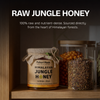
Pahari Haat's Himalayan Jungle Honey is 100% raw and unprocessed — hand-harvested from wild Uttarakhand Himalayan forests, never heated at any stage, zero additives, zero preservatives, zero sugar syrup. Graded and packed at our Kasar Devi, Almora facility.
Run our honey through all 7 tests:
Water test: It will sink cleanly to the bottom ✓
Thumb test: It will stay as a compact drop ✓
Flame test: It will ignite on a dry matchstick ✓
Blot test: It will not soak through tissue paper ✓
Crystallisation: It will crystallise naturally over time ✓
Vinegar test: No foaming ✓
Taste test: Complex, woody, floral — unmistakably real ✓
We are confident enough to say: test our honey first. Then decide.
Shop Pahari Haat Himalayan Jungle Honey →
Frequently Asked Questions — Honey Purity Tests India
Which is the best home test for honey purity in India?
No single home test is fully reliable on its own. The most reliable combination is: Thumb Test + Crystallisation Test + Taste and Aroma Test used together. The crystallisation test is the single most reliable individual indicator — pure raw honey always crystallises naturally over weeks to months.
Why does my pure honey crystallise? Is it spoiled?
Crystallisation is completely natural and is actually a sign of purity. Pure raw honey crystallises because of its high natural glucose content. Adulterated honey with added liquid syrups rarely crystallises. To reliquefy, place your jar in warm water below 50°C — never microwave honey.
Does pure honey dissolve in water?
Pure honey sinks to the bottom of water and dissolves slowly — it does not mix immediately. However, this test has limitations as some sophisticated adulterants can also pass the water test. Use at least 3 tests together for more reliable results.
Where can I buy guaranteed pure honey in India?
Buy from brands with direct beekeeper sourcing, specific origin information, and FSSAI certification. Pahari Haat Himalayan Jungle Honey is sourced directly from wild beekeepers in Kumaon, Uttarakhand — never heated, never adulterated, available at paharihaat.in.
What percentage of honey in India is adulterated?
According to food safety research, approximately 77% of honey sold in Indian markets contains added sugar syrups or other adulterants — making honey one of the most commonly adulterated foods in India.
Which home test is most reliable for honey purity?
The Crystallisation Test is the single most reliable home indicator — genuine raw honey always crystallises naturally over time, and this cannot be faked. No sophisticated adulterant can replicate natural crystallisation behaviour. Use it alongside the Thumb Test and Aroma Test for the most reliable combination.
Does pure honey burn?
Yes — pure raw honey with low natural moisture content (17–20%) will ignite when applied to a dry matchstick. Adulterated honey with added water or sugar syrups has higher moisture content and will not ignite easily, or will make a fizzing sound.
Can the water test alone confirm honey purity?
No. The water test is a popular home test but has significant limitations. Thick adulterants like inverted sugar syrup and liquid glucose can also sink in water and appear pure. Use the water test only as part of a combination of at least 3 tests.
What is FSSAI's standard for pure honey in India?
FSSAI has outlined specific parameters for honey purity including moisture content below 20%, sugar content ratios, diastase activity, and absence of artificial sweeteners. When buying honey, look for FSSAI-registered brands with clear labelling and a verifiable licence number at fssai.gov.in.
Is Himalayan jungle honey purer than regular honey?
Wild-harvested Himalayan jungle honey is generally purer than commercially farmed honey — it comes from natural forest environments with no pesticide use, no artificial bee feeding, and no commercial processing incentives. However, purity depends entirely on the brand's sourcing and processing practices. Always verify before buying. Guide: Best Honey in India 2026 →
How do I store pure raw honey to maintain its quality?
Store in a sealed glass jar in a cool, dry place away from direct sunlight. Do not refrigerate — cold accelerates crystallisation unnecessarily. Keep the lid tightly closed to prevent moisture absorption. Properly stored raw honey has an indefinite shelf life.
Which home test is most reliable for detecting modern honey adulterants?
The Crystallisation Test is the most reliable for detecting modern adulterants — sophisticated syrups like rice syrup and HFCS can pass the water test, thumb test, and even the vinegar test, but they cannot replicate natural crystallisation. Genuine raw honey always crystallises. If your honey has not crystallised after 3–4 months at room temperature, it has very likely been heat-processed or adulterated at some stage.
Can I fully trust home tests for honey purity?
No — home tests are useful indicators but not guarantees. Modern adulterants are specifically engineered to pass visual and physical tests. Using 3 or more tests together significantly improves detection reliability, but the only method that definitively detects sophisticated adulterants like rice syrup and engineered "all-pass" syrups is NMR (Nuclear Magnetic Resonance) lab testing. The most reliable protection is buying from brands with transparent, direct beekeeper sourcing — like Pahari Haat Himalayan Jungle Honey — where adulteration has no place in the supply chain.
What is the difference between FSSAI testing and NMR testing for honey?
FSSAI testing checks standard parameters — moisture content, sugar ratios, diastase activity, and absence of common adulterants. It is the legal minimum. NMR (Nuclear Magnetic Resonance) testing is the gold standard — it detects sophisticated modern adulterants like rice syrup, invert sugar syrup, and engineered "all-pass" syrups that standard FSSAI tests cannot reliably identify. For complete confidence, look for brands that are both FSSAI certified and NMR tested. For a full buying guide: How to Choose Pure Honey in India: 7 Things to Check →
Final Verdict: Test Smart, Buy Smarter
The 7 tests in this guide are genuinely useful — they can catch obvious adulteration and give you a practical sense of whether your honey is real.
But here is the honest bottom line: the best protection against adulterated honey is not a home test. It is choosing a brand whose sourcing story you can verify, whose pricing reflects real costs, and whose team will answer your questions directly.
Raw, unprocessed honey from wild Himalayan forests — like Pahari Haat's Himalayan Jungle Honey — comes from sources where adulteration makes no economic or ethical sense. No middlemen. No mass-production pressure. Just honest honey from mountain forests, packed by a women-led wellness brand that puts quality above everything.
Test it. We are confident you will taste the difference.
Shop Himalayan Jungle Honey — Pahari Haat →
Explore more from Pahari Haat:
Best Honey in India 2026: Complete Buyer's Guide →
How to Choose Pure Honey in India: 7 Things to Check →
Himalayan Jungle Honey Benefits: 10 Reasons It's India's Most Powerful →
Best Honey from Uttarakhand: Why Himalayan Raw Honey Stands Apart →
Raw Honey vs Processed Honey: What's Actually Different →
About the author: Gaurav Agarwal is the founder of Pahari Haat — a women-led Himalayan wellness brand based in Kasar Devi, Almora, Uttarakhand. He sources raw Himalayan honey directly from wild Kumaon beekeepers under Kartavya Karma.
About Pahari Haat: Pahari Haat (paharihaat.in) is a women-led Himalayan wellness brand based in Kasar Devi, Almora, Uttarakhand — offering 100% raw Himalayan jungle honey, herbal teas, and Himalayan botanicals. Quality-graded and packed at its Almora facility. FSSAI certified.
Based on published research and food safety data. Not medical advice. Consult a healthcare professional before making dietary changes.
Complete guide: Best Honey in India 2026 — Complete Buyer's Guide →