Pahadi Pisi Loon: The Hand-Ground Soul of Uttarakhand That Turns Every Bite Into a Memory
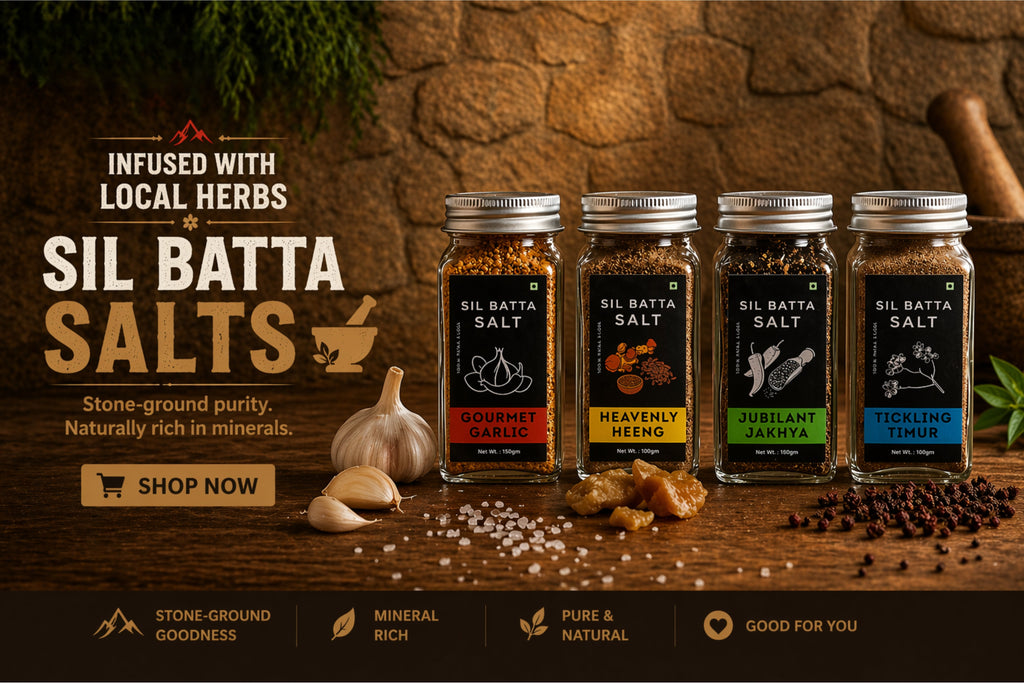
Pahadi Pisi Loon (पहाड़ी पिसी लूण) is a traditional Uttarakhandi flavored salt, hand-pounded on a stone silbatta by Pahadi women artisans in the Himalayas, where Himalayan pink salt and rock salt are slowly crushed together with garlic, heeng, timur (Himalayan Sichuan pepper), jakhya (wild mustard), red chilli, roasted cumin and a whisper of mountain herbs. One pinch on chaach, curd, fruit salad, parathas, dal or even a humble cucumber — and the dish suddenly tastes like it just came down from the hills.
🛒 Shop Now — Just ₹260 per 100g Jar | Free of chemicals, full of mountain magic
👉 Browse the entire Pahari Salts collection here →
Or jump straight to your favourite:
If you've ever eaten in a Pahadi home in Garhwal or Kumaon, you already know the secret. It isn't the ghee. It isn't the firewood. It's the little stone bowl of pisi loon sitting quietly on the side — the seasoning that grandmothers reach for the way the rest of India reaches for ketchup. Except this one tastes like the Himalayas themselves.
At Pahari Haat, our Silbatta Salts are pounded in a tiny village called Matena, in Kasar Devi, Almora, by women who have been doing this since before they could read. This blog is a love letter to that craft — and to the four hand-pounded salts we believe are, hands down, the best Pahadi salts from Uttarakhand you can buy today.
Warning: read this on a full stomach. Otherwise the keyboard will get wet. And if you want to skip the words and go straight to the goods — here's the shop. No judgement.
What Exactly Is Pahadi Pisi Loon? (And Why The World Is Finally Catching On)
In the Pahadi dialect, pisi means "ground" and loon means "salt." Put them together and you get pisi loon — literally, "ground salt." But that translation is a crime, because what comes off a silbatta is not salt. It's an entire flavor universe — and you can taste all four of them here.
Here is what makes pisi loon completely different from anything in your spice rack right now:
- It is never made in a machine. A mixer-grinder heats the spices and kills the volatile oils. The silbatta — a flat stone slab (sil) and a stone roller (batta) — grinds cold and slow. The aromatics stay alive. See our jars to taste the difference.
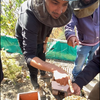
- It is made by women, not factories. In Matena village in Kasar Devi, Almora, women gather on courtyards in the afternoon sun and pound together. The salt absorbs their patience.
- It is infused with wild Himalayan ingredients. Heeng, jakhya, timur, jambu, gandhrayan, faran — ingredients you simply cannot grow in a plain. Try Heavenly Heeng to know what we mean.
- It is a finishing salt, not a cooking salt. Pisi loon is sprinkled after cooking. It's the last pinch. The crown.
This is why food writers, Michelin-trained chefs and the new wave of Indian gourmets are calling Pahadi pisi loon "the truffle salt of the Himalayas." And honestly? Truffle salt should feel flattered by the comparison.
🛒 Add a jar to your cart and try it tonight →
Meet The Pahari Haat Silbatta Salts Family: Four Hand-Pounded Salts That Will Ruin Plain Food For You Forever
We make four heroes. Each one is small-batch, hand-pounded, and packed within days of grinding so the oils never fade. Each 100g jar carries the fingerprint of a Pahadi woman artisan — and a story that begins on a stone. All four are priced at just ₹260 and you can grab them on the Pahari Salts collection page with one click.
1. 🌶️🧄 Gourmet Garlic Silbatta Salt — The Bold One
🛍️ BUY NOW: Gourmet Garlic Silbatta Salt — ₹260 / 100g
Ingredients: Himalayan Pink Salt + fiery red chili + premium garlic, hand-pounded on silbatta
Picture this. Crushed sun-dried red chillies from the lower Kumaon valleys. Hand-peeled garlic that has been gently roasted till it turns the color of old gold. Pink Himalayan rock salt, the kind that comes in fat coral-coloured chunks. All of it tipped onto the silbatta and pounded — not blitzed, pounded — until the garlic shatters into uneven, fragrant granules and the chilli stains the salt a beautiful sunset orange.
This is our Gourmet Garlic Silbatta Salt, and it is unapologetically chilli-forward. The heat hits first, warm and rounded, never harsh. Then the garlic arrives — and oh, what garlic. Because it's hand-crushed and not powdered, you actually bite into tiny granules that pop with flavor. The salt is the bassline holding it all together.
Where Gourmet Garlic tastes outrageously good:
- Sprinkled on a hot ghee-laced aloo paratha straight off the tawa. Forget pickle. This is the upgrade.
- Tossed with buttered sweet corn or roasted makhana.
- Rubbed on a grilled paneer slab thirty seconds before it comes off the pan.
- A pinch on avocado toast — yes, we said it, and yes, your brunch will never recover.
- Stirred into dahi with a splash of mustard oil to make a Pahadi-style dip that ruins hummus for you.
If you love a kick, this is your gateway jar. People who buy one usually come back for three.
2. ✨ Heavenly Heeng Silbatta Salt — The Addictive One
🛍️ BUY NOW: Heavenly Heeng Silbatta Salt — ₹260 / 100g
Ingredients: Rock salt + pure asafoetida (heeng) + roasted cumin (jeera), hand-pounded on silbatta
We named this one carefully. Heavenly. Because the first time you put it on something cold — chilled chaach, sweet seasonal fruit, thick set curd — your brain does a little flip. It tastes like nostalgia you didn't know you had.
Here's the trick. Pure compounded heeng is bitter and bullying. But when you pound real kabuli heeng with dry-roasted cumin and Himalayan rock salt — all on stone, all slow — the heeng mellows. It turns savoury, almost umami, with that unmistakable tug-at-the-back-of-the-tongue character that makes you want a second bite before you've finished the first. Bonus: heeng is a celebrated Ayurvedic digestive — it eases bloating and wakes up appetite.
Why Heavenly Heeng works like a taste elevator:
- Sprinkle on chaach (buttermilk) — chilled, with a swirl of mustard oil floating on top, and a pinch of Heavenly Heeng. We are not exaggerating when we say this drink will change your summer.
- Dust on fruit salad — watermelon, muskmelon, apple, banana, a squeeze of lime, a pinch of Heavenly Heeng. The salt-sweet-savoury triangle is dangerous.
- Top your dahi-chawal with it. You will eat two extra plates.
- Stir into raita with grated cucumber and roasted cumin.
- Sprinkle on chilled tarbooz at four in the afternoon in May. Thank us later.
Genuinely addictive. We mean that. Customers message us asking if it's "safe" to eat this much. (It is. It's just heeng, cumin and salt. The addiction is purely emotional.)
3. ⚡ Tickling Timur Silbatta Salt — The Tingler
🛍️ BUY NOW: Tickling Timur Silbatta Salt — ₹260 / 100g
Ingredients: Himalayan Pink Salt + aromatic Timur (Himalayan Sichuan pepper), hand-pounded on silbatta
Now this one. This one is for the adventurers.
Timur is the Uttarakhandi name for Zanthoxylum armatum — the Himalayan cousin of Sichuan pepper. It grows wild in the mid-altitude forests of Uttarakhand and Nepal, on thorny shrubs that locals harvest by hand. The berries look like tiny rust-coloured peppercorns, but the flavor is otherworldly: sharp citrus, pine resin, a whisper of grapefruit zest, and then — boom — that famous numbing tingle.
When we pound dehusked timur with Himalayan pink salt on the silbatta, we get a coarse, fragrant, electric-tasting salt that does something no other seasoning in the world does: it makes your tongue dance. People literally giggle the first time they taste Tickling Timur. The Pahadi name for this sensation is jhanjhanahat — "the tingle." There is no English word for it. There doesn't need to be.
Tickling Timur is your new finishing salt for:
- Grilled fish — especially trout or rohi. Timur and fish are soulmates in the Himalayas.
- Roasted chicken or chicken tikka — sprinkle right before serving, watch eyes widen.
- Dark chocolate — yes. A square of 70% dark chocolate with a few crystals of Tickling Timur on top is dessert at a Himalayan michelin restaurant you can't get into.
- Fresh mango slices or pineapple chunks — the citrus notes in timur make tropical fruit sing.
- Pahadi kafuli, jhol, or any dal — one small pinch at the end. Transformative.
- Cocktails. A timur-salt rim on a margarita or a gin sour will spoil you for normal salt forever.
This is the jar that converts skeptics. One sprinkle and they get it.
4. 🌾 Jubilant Jakhya Silbatta Salt — The Crunchy One
🛍️ BUY NOW: Jubilant Jakhya Silbatta Salt — ₹260 / 100g
Ingredients: Himalayan Pink Salt + nutty wild Jakhya seeds, hand-pounded on silbatta
If timur is electric, jakhya is joyful — hence jubilant.
Jakhya (Cleome viscosa) is a wild mustard seed unique to Uttarakhand, smaller and more delicate than regular black mustard, with a nutty, almost sesame-like flavor when toasted. Pahadi cooks have tempered dal and sabzi with jakhya for centuries — but pounding it cold with salt on silbatta? That's the magic move, and that's exactly what Jubilant Jakhya is.
The result is a crunchy, nutty, mustardy salt with texture you can actually feel — tiny crackly seeds that pop softly between your teeth. The crunch is the whole point. Don't expect it to dissolve. That's not a flaw; that's the feature.
Sprinkle Jubilant Jakhya on:
- Hot ghee-rice or jeera rice — the seeds toast a tiny bit more from residual heat. Heaven.
- Boiled or grilled corn — better than any street-style masala corn you've ever had.
- Bhutte ki sabzi, aloo ke gutke, or any Pahadi sabzi as the final crown.
- Cucumber kachumber, kakdi raita — the crunch on crunch is fantastic.
- Roasted vegetables — pumpkin, sweet potato, beetroot. Anything that loves a little texture.
- Curd rice or chaas — like jakhya tadka in dry form.
If you've ever bitten into a dal in a Pahadi village and felt the tiny crunch and wondered what is that? — it was jakhya. And this jar lets you carry that magic home.
🎁 The Smart Move: Get All Four Pahadi Pisi Loon Salts Together
The smart move? Stock all four. Each one shines on different dishes, and together they cover practically every meal you cook — breakfast parathas with Gourmet Garlic, afternoon chaach with Heavenly Heeng, dinner grilled fish with Tickling Timur, and curd rice with Jubilant Jakhya at midnight.
🛒 SHOP ALL FOUR PAHARI SILBATTA SALTS NOW →
✅ Hand-pounded silbatta salts, 100g each
✅ ₹260 per jar — only ₹1,040 for the complete set
✅ Hand-pounded fresh, shipped pan-India in 5–9 days
✅ Crafted by Pahadi women artisans in Kasar Devi, Almora
Why Silbatta Matters: The Difference Between Salt And Pisi Loon
Let us be very specific, because this is the heart of everything we make — and the reason Pahari Haat Silbatta Salts taste different from anything else on the market.
A silbatta is a two-piece grinding stone. The sil is a large flat slab of granite or basalt. The batta is a heavy cylindrical roller. The cook kneels, places the ingredients on the sil, and rolls the batta over them in slow, rhythmic passes — sometimes for thirty minutes, sometimes for an hour, depending on the recipe.
Three things happen on a silbatta that cannot happen in any electric grinder on Earth:
- Zero heat damage. Electric blades spin at 20,000+ rpm and generate friction heat that flash-cooks the spices, destroying volatile aromatic oils. Stone grinding stays cool. The oils stay alive. The flavor stays loud. (Open any one of our jars and you'll smell what we mean before you taste it.)
- Uneven, beautiful texture. Machines pulverize. Stones crush. The variation — some bits powdered, some bits granular — is what makes every bite different. It's why you keep reaching for more.
- The mineral kiss. Real basalt silbattas, especially the old family ones passed down generations, impart a faint mineral note to whatever they pound. Chefs call it terroir. Grandmothers just call it swaad.
This is why factory-made "Pahadi salt" tastes flat. And it's why our women artisans, working from their own kitchens in Matena village in Kasar Devi, will never switch to a machine. We pay them fairly, we buy at their pace, and we ship only what was pounded that week. Tradition is the product.
🛒 Taste the silbatta difference — shop now
How To Use Pahadi Pisi Loon: A Quick Pairing Cheat-Sheet (with Direct Buy Links)
Pin this to your fridge. Seriously.
| Salt | Best On Cold Things | Best On Hot Things | Best Surprise Use | 🛒 Shop |
|---|---|---|---|---|
| Gourmet Garlic | Curd dips, hummus, cold pasta salad | Parathas, grilled paneer, popcorn | Avocado toast | Buy ₹260 → |
| Heavenly Heeng | Chaach, fruit salad, raita, dahi | Dal tadka, khichdi, plain rice | Sliced watermelon | Buy ₹260 → |
| Tickling Timur | Fresh mango, pineapple, cocktail rims | Grilled fish, chicken, dal | Dark chocolate squares | Buy ₹260 → |
| Jubilant Jakhya | Cucumber salad, curd rice | Hot rice, roasted veggies, bhutte ki sabzi | Buttered toast | Buy ₹260 → |
Rule of thumb: start with a small pinch. Pisi loon is concentrated flavor. Add, taste, add more. Your dish will tell you when it's enough.
Or skip the choosing and grab all four here — that's what most of our customers end up doing anyway.
The Women Behind The Jars: Why Buying Pahari Haat Is More Than A Purchase
Every jar of Pahari Haat Silbatta Salts is pounded by a woman in our home village of Matena, Kasar Devi, Almora, Uttarakhand. There is no middleman. The women set their own pace, choose their own days, and earn at rates that respect the slow, careful labor that goes into each 100g jar.
When you buy a jar from Pahari Haat, you are doing four things at once:
- Reviving a dying craft. Silbatta cooking is vanishing as villages migrate to plains. Your purchase keeps the stones turning.
- Supporting rural women's livelihoods. Directly. Visibly.
- Eating cleaner food. No preservatives. No anti-caking agents. No machine heat. No adulteration.
- Tasting India the way it was meant to be tasted — regional, seasonal, hand-made.
Honestly, no factory salt can compete with that, and we don't think one ever will.
Where Does Pahadi Pisi Loon Come From? A Tiny Bit Of History
Salt has always been precious in the high Himalayas. For centuries, traders walked it up from the plains of India and across passes from Tibet. To stretch every grain, Pahadi women blended salt with whatever the forest and field offered — garlic, mustard, heeng carried up from Hingol, wild timur picked from thorny shrubs, jakhya gathered from the edges of barley fields. Pisi loon was born out of thrift and brilliance.
Today, it travels the other way. From a stone slab in a Kasar Devi courtyard, into a sealed jar, into a kitchen in Bangalore or Brooklyn — carrying the entire Himalaya in a single pinch.
Start your jar collection here →
Frequently Asked Questions About Pahadi Pisi Loon and Pahari Haat Silbatta Salts
Q: What is Pahadi Pisi Loon? A: Pahadi Pisi Loon is a traditional flavored salt from Uttarakhand, made by hand-pounding Himalayan pink salt or rock salt with local herbs, spices and ingredients like garlic, heeng, timur or jakhya on a stone silbatta. Try the original at Pahari Haat.
Q: Why is it called Pisi Loon? A: In the Garhwali and Kumaoni dialects, pisi means "ground" and loon means "salt." Together they describe a salt that has been stone-pounded with other ingredients to release a deeper, layered flavor.
Q: Which is the best Pahadi salt from Uttarakhand? A: The best Pahadi salts from Uttarakhand are the four hand-pounded varieties from Pahari Haat: Gourmet Garlic (chilli + garlic), Heavenly Heeng (asafoetida + cumin), Tickling Timur (Himalayan Sichuan pepper) and Jubilant Jakhya (wild mustard seed). Each is ₹260 for 100g, pounded by Pahadi women artisans in Kasar Devi, Almora.
Q: How is pisi loon different from regular flavored salt? A: Regular flavored salts are machine-blended, which generates heat and destroys volatile oils. Pisi loon is cold-ground on stone, preserving aroma, oils and a uniquely uneven texture. Taste it yourself →
Q: Can I use Pahadi flavored salt in everyday cooking? A: Yes, but it shines brightest as a finishing salt — sprinkled on food just before eating. Use it on parathas, dal, rice, curd, chaach, fruit salads, roasted veggies, grilled meats and cocktails. Start with a small pinch. Pick your starter jar here.
Q: What is Timur and is it the same as Sichuan pepper? A: Timur (Zanthoxylum armatum) is the Himalayan cousin of Sichuan pepper. It grows wild in Uttarakhand and Nepal. It has a citrusy aroma and produces the famous tongue-tingling sensation called jhanjhanahat. Try it in our Tickling Timur Silbatta Salt — ₹260.
Q: Is Jakhya the same as black mustard seed? A: No. Jakhya (Cleome viscosa) is a wild Himalayan seed, smaller and nuttier than common black mustard. It is unique to Uttarakhand and surrounding hill regions and gives a soft crunch and toasted-nut flavor. Try it in Jubilant Jakhya Silbatta Salt — ₹260.
Q: How long does Pahadi pisi loon stay fresh? A: Stored in an airtight glass jar away from sunlight and moisture, our hand-pounded silbatta salts retain peak flavor for 4–6 months.
Q: Is it spicy? A: Only the Gourmet Garlic is noticeably chilli-forward. Heavenly Heeng, Tickling Timur and Jubilant Jakhya are flavorful but not "spicy" in the chilli-heat sense.
Q: How much does Pahadi Pisi Loon cost? A: Each 100g jar of Pahari Haat Silbatta Salt is ₹260. Shipping is ₹60 across India with delivery in 5–9 days.
Q: Can I gift Pahari Haat Silbatta Salts? A: Absolutely. Our four-jar Pahadi Pisi Loon collection is one of the most popular wedding, Diwali and corporate gifts we ship — especially for people who already have everything.
Q: Where can I buy the best Pahadi loon from Uttarakhand? A: Directly from Pahari Haat. We ship pan-India and pound weekly to ensure freshness, authenticity, and fair pay for the women artisans behind each jar. You can also order on WhatsApp: +91 9625689172.
The Final Pinch
There is something almost sacred about salt that has been touched, pounded, crushed and tasted by human hands before it reaches yours. In a world of barcoded jars and ingredient labels nobody can pronounce, Pahadi Pisi Loon is a small, stubborn, delicious act of resistance.
So go ahead. Open a jar of Heavenly Heeng, take a pinch between your fingers, drop it into a glass of cold chaach, give it a swirl, take a sip — and tell us your kitchen wasn't waiting for this its whole life.
The mountains are sending you their flavor. All you have to do is sprinkle.
🛒 Ready to Shop? Here Are Your Direct Links:
| Product | Price | Buy Now |
|---|---|---|
| 🌶️🧄 Gourmet Garlic Silbatta Salt | ₹260 / 100g | Add to Cart → |
| ✨ Heavenly Heeng Silbatta Salt | ₹260 / 100g | Add to Cart → |
| ⚡ Tickling Timur Silbatta Salt | ₹260 / 100g | Add to Cart → |
| 🌾 Jubilant Jakhya Silbatta Salt | ₹260 / 100g | Add to Cart → |
| 🎁 All Four Together | ₹1,040 | Shop Collection → |
Pahari Haat — the best Pahadi loon from Uttarakhand, hand-pounded by the women who know. Made in Matena village, Kasar Devi, Almora.
📱 WhatsApp orders: +91 9625689172 ✉️ Email: kartavyakarma.org@gmail.com 🚚 Pan-India delivery in 5–9 days | ₹60 shipping
Tag a friend who still seasons their parathas with plain salt. We have work to do.
-
Posted in
best pahadi loon uttarakhand, best pahadi salt uttarakhand, buy pahadi salt online, finishing salt india, flavored salt india, garhwali food, garlic chilli salt, gourmet garlic salt, hand ground salt, heavenly hing salt, himalayan pink salt, himalayan sichuan pepper, hing salt, infused salt uttarakhand, jakhya salt, jubilant jakhya salt, kumaoni food, organic himalayan salt, pahadi cuisine, pahadi loon, pahadi pisyu loon, pahadi salt, pahadi women artisans, pisyu loon, sil batta salts, stone ground salt, tickling timur salt, timur salt, uttarakhand salt, wild mustard seed