Raw Honey from Uttarakhand: What Makes It India's Purest Honey
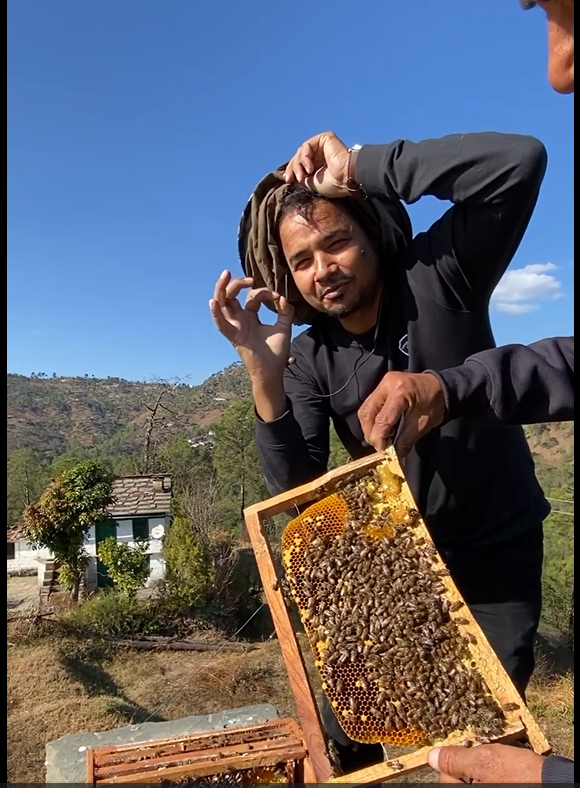
Quick Answer: Raw honey from Uttarakhand is honey that has never been heated, filtered, or processed in any way — reaching you exactly as the bees made it, with all natural enzymes, bee pollen, propolis, and bioactive compounds completely intact. Recent research shows that raw honey contains up to 200 bioactive compounds, while commercial processed honey loses most of its enzymes and antioxidants through heat treatment. Pahari Haat's Himalayan Jungle Honey is 100% raw — never heated, never processed at any stage.
Shop Raw Himalayan Honey — Pahari Haat →
Here is a question worth asking before you open your next jar of honey.
How do you know it's actually raw?
Not "raw" as a marketing word on a label. Not "raw" as in minimally processed. Raw as in: this honey has never been heated. Not once. Not even slightly. It left the hive and came to you without a single industrial intervention between those two points.
Because that distinction — genuinely raw vs. commercially labelled raw — is the entire difference between a nutritionally alive food and an expensive sugar syrup wearing a health halo.
At Pahari Haat, our Himalayan Jungle Honey from Uttarakhand is 100% raw. No heat. No processing. No exceptions. And in this guide, we'll explain exactly what that means, why it matters scientifically, and how to tell the difference.
What Does "Raw Honey" Actually Mean?
The term "raw honey" is used loosely — and often misleadingly — across the Indian honey market. So let's be precise.
True raw honey is honey that has:
- Never been heated at any point after extraction
- Never been pasteurized or thermally treated
- Never been ultra-filtered (only minimally strained to remove wax debris)
- Never had additives, sugar syrups, or preservatives added
It comes straight from the hive — extracted, strained through muslin or basic filtration to remove wax and large debris, and packed. That's it. The bees made it. You receive it. Nothing in between alters it.
Most of the honey you find in grocery stores is pasteurized. The high heat of pasteurization kills unwanted yeast, improves honey's colour and texture, removes any crystallization, and extends its shelf life.
But here is the critical problem with that process: honey has the ability to act as a dietary antioxidant — but the ingredients of honey that exert antioxidant, antimicrobial, anti-inflammatory, antiproliferative, and anticancer effects are precisely the compounds most vulnerable to heat damage.
When you heat honey, you do not just change its texture. You destroy what makes it medically valuable.
What Raw Honey Contains That Processed Honey Doesn't
Honey is a supersaturated solution of sugars, mainly composed of fructose (38%) and glucose (31%), but it also contains minerals, proteins, free amino acids, enzymes, vitamins, and polyphenols. Among polyphenols, flavonoids are the most abundant and are closely related to its biological functions.
Honey is composed of at least 181 substances — it contains enzymes, amino acids, proteins, flavonoids, phenolic acids, and a miscellaneous group of bioactive compounds.
Here is what survives only in genuinely raw, unprocessed honey:
Natural Enzymes — The Living Compounds Raw honey contains four key enzymes — diastase, invertase, glucose oxidase, and catalase. These are produced by bees during honey-making and are critical to honey's digestive and antimicrobial properties. The main factors for antimicrobial activity of honey are the enzymatic glucose oxidation reaction — glucose oxidase produces hydrogen peroxide, which is honey's primary natural antibacterial agent. All four enzymes are destroyed by heat. In processed honey, they are gone.
Bee Pollen — The Immunity Compound Raw honey contains bee pollen — a nutritional powerhouse containing over 250 bioactive substances including proteins, vitamins, minerals, flavonoids, and carotenoids. Phenolic compounds from honey are bioavailable and increase the antioxidant activity of plasma — they promote the maintenance and recovery of the balance of the intestinal microbiota by stimulating the secretion of antioxidant enzymes such as superoxide dismutase, catalase, and glutathione peroxidase. Ultra-filtration in commercial honey processing removes bee pollen entirely.
Propolis — The Bee Defence System Trace propolis present in raw honey carries its own extraordinary antimicrobial and antifungal properties. Processed and ultra-filtered honey removes this.
Polyphenols and Flavonoids — The Antioxidant Army Honey contains phenolic acids, enzymes including glucose oxidase and catalase, flavonoids, ascorbic acid, carotenoids, amino acids, and proteins — together these components work synergistically to neutralise free radicals, regulate antioxidant enzyme activity, and reduce oxidative stress.
The ability of honey for antioxidant properties is related to the brightness of honey — the darker honey has higher value of antioxidant. This is why Uttarakhand's deep forest jungle honey — dark amber in colour — has significantly higher antioxidant activity than lighter commercial honey varieties.
Raw Honey vs Processed Honey — The Complete Comparison
| Pahari Haat Raw Uttarakhand Honey | Commercial Processed Honey | |
|---|---|---|
| Heat treatment | Zero — never heated at any stage | Heated 60–70°C+ for pasteurisation |
| Natural enzymes | Fully intact — diastase, invertase, glucose oxidase, catalase | Destroyed by heat |
| Bee pollen | Present — immunity and nutrition benefits intact | Removed by ultra-filtration |
| Propolis | Trace present | Removed |
| Antioxidant activity | Maximum — raw honey's antioxidant activity is three times higher than processed retail samples | Significantly reduced |
| Colour | Varies naturally by season and region | Uniform — standardised by blending |
| Taste | Complex, layered, seasonal variation | Flat, uniform, one-dimensional |
| Crystallisation | Natural — sign of authenticity | Prevented by heat processing |
| Additives | Zero | Often blended with sugar syrups |
| Shelf appearance | May crystallise — this is correct | Permanently liquid — this is not |
Why Uttarakhand Produces Exceptionally Potent Raw Honey
Not all raw honey is equal — even among genuinely unprocessed varieties. The nutritional potency of raw honey is directly determined by what the bees eat. And Uttarakhand's bees eat extraordinarily well.
The amount of antioxidants in honey has a strong relationship with the plants selected by honey bees. Bees foraging in Uttarakhand's high-altitude forests and mountain meadows collect nectar from rhododendron, wild thyme, Himalayan herbs, alpine wildflowers, oak blossoms, medicinal plants, and hundreds of other botanicals found only in this ecosystem. Each nectar source contributes its own distinctive polyphenols, flavonoids, and bioactive compounds to the final honey.
The composition of honey varies from floral source to origin — its content depends on the floral source and on external factors such as seasonal and environmental conditions.
This is why Uttarakhand raw honey — sourced from diverse high-altitude forest botanicals — has a nutritional depth that commercially farmed honey from a single crop source cannot approach. The biodiversity of the bees' foraging environment directly translates into the complexity and potency of the honey they produce.
8 Science-Backed Benefits of Raw Honey
These benefits are well-documented in clinical research — and depend critically on the honey being genuinely raw and unprocessed.
1. Extraordinary Antioxidant Protection
Honey has the ability to act as a dietary antioxidant. According to scientific literature, honey applied alone or in combination with conventional therapy is a promising antioxidant in the control of diseases commonly associated with oxidative stress.
Recent research confirms that honey's bioactive compounds work synergistically to neutralise free radicals, regulate antioxidant enzyme activity, and reduce oxidative stress — providing robust protection against cardiovascular issues, anti-inflammatory effects, enhanced glycemic control, immune modulation, neuroprotection, and effective wound healing.
2. Powerful Natural Antimicrobial Activity
The main factors for antimicrobial activity of raw honey are the enzymatic glucose oxidation reaction — glucose oxidase continuously produces low levels of hydrogen peroxide, creating a sustained antimicrobial environment — alongside high osmotic pressure, low pH, and phytochemicals. This is why raw honey has been used effectively for wound treatment, throat infections, and bacterial inhibition across centuries of traditional medicine.
3. Digestive Health and Gut Support
Honey is considered a fermented and consequently probiotic product — it reduces inflammation and intestinal permeability and changes the composition of the intestinal flora. Honey's phenolic compounds promote the maintenance and recovery of the balance of the intestinal microbiota.
Traditionally, honey has been used in the treatment of constipation, hepatitis, worm infestation, and gastrointestinal diseases — and modern scientific literature supports its use for gastrointestinal conditions.
4. Heart Health and Cholesterol Management
Honey positively affects risk factors for cardiovascular diseases by inhibiting inflammation, improving endothelial function, improving the plasma lipid profile, and increasing low-density lipoprotein resistance to oxidation.
5. Wound Healing and Skin Repair
Honey stimulates the growth of fibroblasts and epithelial cells to repair damage. H2O2 produced by raw honey stimulates nuclear transcription factors for cell multiplication and wound healing — and the wound debris and bacteria are digested by active proteases activated by honey's hydrogen peroxide.
Honey has been used traditionally in the treatment of eczema, healing of ulcers, and wounds — and modern evidence supports its use in wound care. Some hospitals even use it as a treatment for wounds.
6. Respiratory Relief and Cough Support
Traditionally, honey has been used in the treatment of bronchial asthma and throat infections — and according to modern scientific literature, honey may be useful for respiratory conditions.
Research published in 2024 and endorsed by WHO data confirms raw honey as an effective natural cough remedy — particularly for children, where it is recommended over many over-the-counter cough suppressants.
7. Blood Sugar Management Support
The antidiabetic and hypoglycemic capacity of honey can be attributed to its antioxidant ability through its phenolic compound content — as the pathogenesis of diabetes appears closely associated with the presence of oxidative stress and ROS. Honey consumption has been associated with increased serum levels of antioxidants such as vitamin C, beta-carotene, and glutathione reductase.
Raw honey has a glycaemic index of approximately 60 — lower than refined sugar — and its natural fructose-glucose balance provides more controlled blood sugar response than processed sweeteners.
8. Brain and Mood Support
According to modern scientific literature, honey may be useful and has protective effects for the treatment of nervous system conditions — with emerging research pointing to honey's neuroprotective properties.
The natural glucose in raw honey is the brain's primary fuel source, delivering clean cognitive energy without the crash of refined sugar or artificial stimulants.
How to Know If Your Raw Honey Is Genuinely Raw
This is where most buyers are misled. "Raw" on a label is not regulated in India — any brand can use it regardless of their actual processing methods.
Here is how to verify:
The crystallisation test — most reliable. Genuinely raw, unprocessed honey will crystallise naturally over weeks to months. Raw honey comes straight from the honeycomb — it naturally crystallises over time, and this is a sign of authenticity. If your "raw honey" has been sitting liquid and smooth for six months or more at room temperature, it has been heat-processed. Crystallisation is not a defect. It is proof.
The colour test. Genuine raw Uttarakhand forest honey ranges from light golden to deep amber — and the colour changes naturally between batches and seasons. The darker honey has higher antioxidant value. Uniformly bright golden honey that never varies is a processing signal.
The aroma test. Open the jar and smell before tasting. Authentic raw honey has a complex, layered, faintly earthy-floral aroma. If it smells like flat sweetness with no complexity, it has been processed.
The texture test. Raw honey should be thick and viscous — almost reluctant to pour. Thin, watery, free-flowing honey has either been diluted or heat-thinned.
Ask the brand directly. Any genuine raw honey brand should be able to answer: "Is this honey heated at any point?" The answer should be clear and direct — not vague. At Pahari Haat, our answer is simple: No. Never. Not at any stage.
What Happens When You Add Raw Honey to Hot Water or Tea
This is one of the most important practical points for raw honey consumers — and one of the least understood.
Never add raw honey to boiling water or very hot tea.
The natural enzymes in raw honey — particularly glucose oxidase and invertase — begin to degrade above approximately 40°C and are substantially destroyed above 60°C. Adding raw honey to boiling water or a just-brewed cup of tea defeats the primary purpose of buying raw honey in the first place.
The right way:
- Allow your tea or water to cool for 2–3 minutes after boiling
- Check that it is warm but not hot — comfortable to hold your hand near the cup
- Then add your raw honey and stir gently
Your honey's enzymes, antimicrobial compounds, and antioxidants remain intact. Your tea tastes better. And you get the full nutritional benefit you paid for.
This applies equally to: warm water with lemon, herbal teas, kadha, golden milk, and any other warm beverage you add honey to.
Pahari Haat Raw Himalayan Honey — Our Promise
At Pahari Haat, we are a women-led Himalayan wellness brand. Our commitment to raw honey is not a marketing position — it is a quality standard we apply without exception.
Our Himalayan Jungle Honey is:
✓ 100% Raw — Never heated, never processed in any way. Zero heat at any stage. It leaves the hive and reaches you with nothing in between that changes it.
✓ Minimally filtered — strained through muslin cloth to remove wax debris only. Bee pollen, propolis trace, and natural compounds remain.
✓ Zero additives — no sugar syrup, no glucose syrup, no preservatives, no artificial colour. Ingredients: honey.
✓ Naturally crystallising — it will crystallise. We consider this a quality feature. To reliquefy, warm water bath only — no microwaving.
✓ Quality-graded at Kasar Devi, Almora — every batch checked for colour, aroma, moisture, and purity at our Uttarakhand facility.
✓ Packed by women artisans — Pahari Haat is a women-led wellness brand creating sustainable mountain community livelihoods.
Shop Pahari Haat Raw Himalayan Jungle Honey →
Frequently Asked Questions — Raw Honey from Uttarakhand
What makes raw honey different from regular honey?
Raw honey has never been heated or processed in any way — all natural enzymes, bee pollen, propolis, antioxidants, and bioactive compounds remain completely intact. Regular commercial honey is pasteurised at high heat and ultra-filtered, destroying most of these nutritionally active compounds. Research shows raw honey's antioxidant activity is three times higher than processed retail honey.
Is raw honey from Uttarakhand safe to eat daily?
Yes. Raw honey from Uttarakhand is a natural food that has been consumed daily in Himalayan communities for centuries. One to two teaspoons per day is the standard wellness quantity for healthy adults. Never give honey of any kind to infants under 12 months.
Why is my raw honey from Uttarakhand crystallising?
Crystallisation is the most reliable sign that your honey is genuinely raw and unprocessed. Raw honey's natural glucose content is supersaturated and forms crystals naturally over time — exactly as it should. To reliquefy, place the jar in warm water. Never microwave raw honey as this destroys its enzymes and defeats the purpose of buying raw.
Can I add raw honey to hot tea or boiling water?
No — not to boiling water or very hot tea. Raw honey's natural enzymes begin degrading above approximately 40°C. Always add honey to warm — not hot — beverages, after they have cooled for 2-3 minutes. This preserves all the active compounds that make raw honey worth buying.
How do I know if raw honey is genuinely raw or just labelled raw?
The most reliable indicator is crystallisation — genuinely raw honey will crystallise naturally within weeks to months at room temperature. Permanently liquid honey has been heat-processed. You can also check colour variation between batches (raw honey varies), aroma complexity (raw honey is layered and distinct), and texture (raw honey is thick and viscous).
Is raw honey better for diabetics than regular honey?
Raw honey has a lower glycaemic index than refined sugar and contains antioxidant phenolic compounds that research associates with improved glycemic control. However, it still raises blood sugar. People with diabetes should consult their doctor before regular consumption and use only small quantities.
What is the shelf life of raw honey from Uttarakhand?
Properly stored raw honey has an extraordinarily long shelf life — archaeologists have found 3,000-year-old honey in Egyptian tombs that was still edible. Store in a sealed glass jar away from direct sunlight and heat. Do not refrigerate. Raw honey may crystallise during storage — this is not spoilage, and the honey remains perfectly edible.
Does raw honey help with coughs and sore throats?
Yes — raw honey is one of the most evidence-supported natural remedies for coughs and throat discomfort. WHO guidelines recommend honey as a first-line treatment for children's coughs. Raw honey's natural antimicrobial compounds, anti-inflammatory flavonoids, and soothing viscosity all contribute. Take 1 teaspoon directly or in warm (not hot) water with lemon.
Final Verdict: Raw Honey Is Not a Category — It's a Standard
"Raw honey" has become a marketing category. Every second jar on Amazon India calls itself raw. Most of them are not.
Genuine raw honey — honey that has truly never been heated or processed at any stage — is rarer and more valuable than labels suggest. It is nutritionally alive. It contains enzymes that work in your body. It carries pollen that strengthens your immunity. It delivers antioxidants that clinical research confirms protect against cardiovascular disease, oxidative stress, and chronic inflammation.
Uttarakhand's mountain forests produce some of the most antioxidant-rich, botanically diverse raw honey in India. And at Pahari Haat, we deliver it to you exactly as the bees made it — never heated, never processed, packed with care by women artisans.
That is what raw honey actually means.
Shop Pahari Haat Raw Himalayan Jungle Honey →
Explore More from Pahari Haat:
How to Test Honey Purity at Home: 7 Easy Methods →
Best Honey from Uttarakhand: Why Himalayan Raw Honey Beats Everything →
Best Pure Himalayan Honey: Why Apis Cerana Indica Bees Matter →
About Pahari Haat: Pahari Haat (paharihaat.in) is a women-led Himalayan wellness brand based in Kasar Devi, Almora, Uttarakhand. It offers 100% raw Himalayan jungle honey, sea buckthorn berry, herbal teas, and Himalayan botanicals — quality-graded and packed at its Almora facility.
Based on the research available on the internet. This article is not intended as medical advice. Please consult a healthcare professional before making any changes to your diet or wellness routine.
Complete guide: Best Honey in India 2026 — Complete Buyer's Guide →