
Sustainable Corporate Gifting in India: A Complete Guide to Meaningful Business Gifts
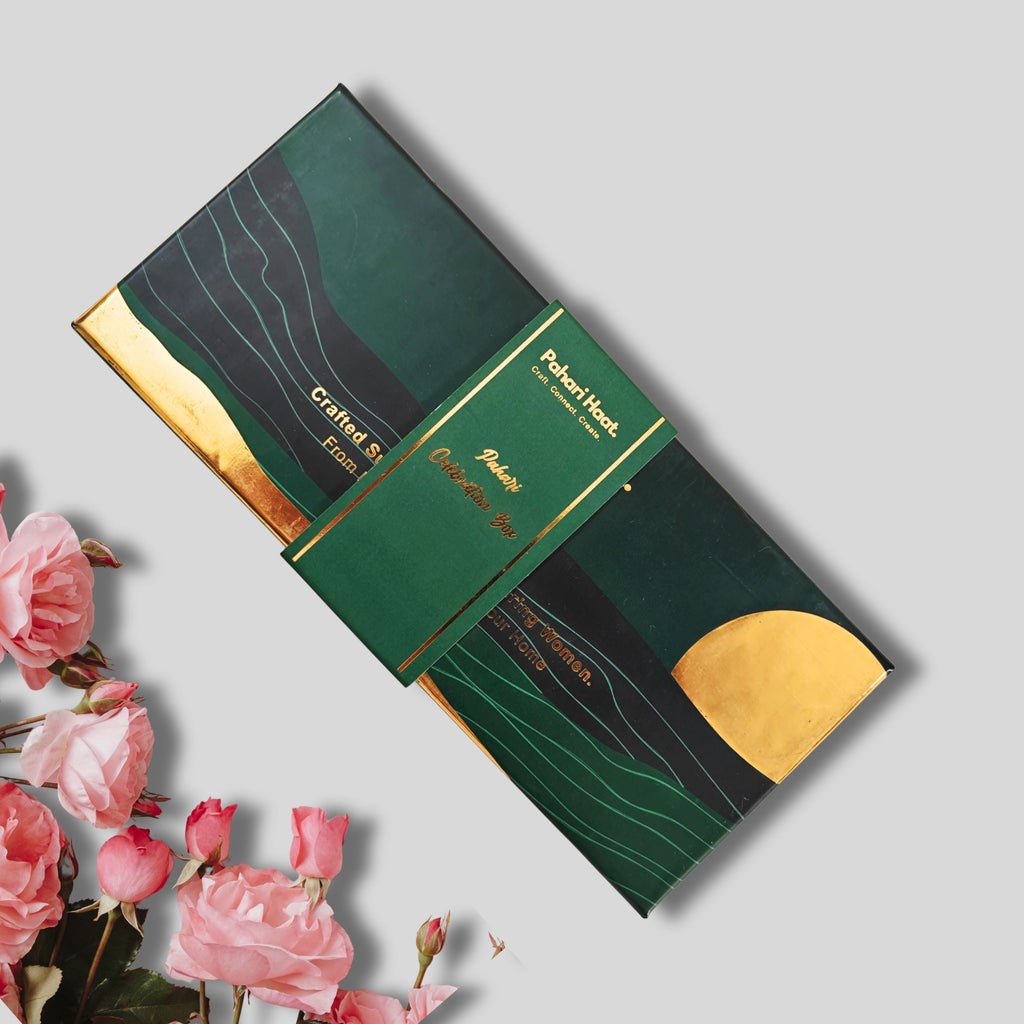
Corporate gifting in India has traditionally followed a familiar formula.
Diwali arrives. Catalogues circulate. Budgets are approved. Boxes of sweets, dry fruits, electronics and branded merchandise are ordered in bulk.
The gifts are distributed.
The festival ends.
And, quite often, the gift is forgotten.
But a quiet shift is taking place.
Companies are beginning to ask a better question—not simply “What should we gift?”, but “What should our gift say about us?”
That question is driving the rise of sustainable corporate gifting in India.
Businesses are increasingly exploring gifts that are useful, thoughtfully sourced, beautifully presented and connected with real people and places. From artisanal products and Himalayan wellness hampers to handcrafted candles, regional foods and gifts supporting rural livelihoods, corporate gifting is beginning to move from merchandise to meaning.
Because when hundreds or thousands of gifts are purchased together, gifting is no longer a small gesture.
It becomes purchasing power—and purchasing power can create impact.
Quick Answer: What Is Sustainable Corporate Gifting?
Sustainable corporate gifting means choosing business gifts that are useful, responsibly sourced, thoughtfully packaged and designed to create positive environmental or social value. It can include eco-friendly corporate gifts, artisanal products, wellness hampers, handmade gifts and products connected with farmers, artisans and rural communities.
The best sustainable corporate gifts balance three things: recipient value, responsible sourcing and meaningful impact—helping companies appreciate employees and clients while making their gifting more thoughtful, memorable and aligned with their values.
Why Corporate Gifting in India Is Changing
A corporate gift has always been more than a product.
It is communication.
A welcome kit tells a new employee, you belong here.
A festive hamper tells a team, we appreciate what you contributed this year.
A client gift says, we value this relationship.
A leadership gift can express respect in a way that an email never could.
The problem is that when corporate gifting becomes purely transactional, this meaning disappears.
Generic merchandise may carry a company logo, but it does not necessarily carry a company’s values.
This is why organisations are beginning to look beyond conventional gifting catalogues.
Modern employees and clients are more aware of sustainability, local production, craftsmanship, wellness and responsible consumption.
This shift is part of a much larger movement towards sustainable gifting in India, where every gift is considered not only for what it contains, but also for how it is made, who it supports and the impact it leaves behind.
At the same time, companies themselves are discussing ESG, responsible procurement, diversity, community impact and sustainability.
Gifting naturally becomes part of that conversation.
If an organisation speaks about sustainability throughout the year but sends excessively packaged, disposable or forgettable gifts during Diwali, there is a disconnect.
A thoughtfully designed gifting programme can do the opposite.
It can make values tangible.
What Makes a Corporate Gift Truly Sustainable?
The word sustainable is easy to print on a catalogue.
Building a genuinely thoughtful gift is harder.
A bamboo pen placed inside several layers of unnecessary packaging does not automatically make a hamper sustainable.
Neither does replacing a plastic ribbon with jute while filling the box with products recipients are unlikely to use.
True sustainable corporate gifting should look at the entire gifting journey.
It begins with usefulness.
Will the recipient actually enjoy or use what is being gifted?
Then comes provenance.
Where did the products come from? Who made them? Are they connected with artisans, farmers, independent makers or responsible businesses?
Packaging matters, but it should be considered intelligently rather than cosmetically.
And finally comes impact.
What economic value does the purchase create beyond the gifting company and supplier?
At Pahari Haat, we think about sustainable gifting through a simple principle:
Recipient. Maker. Planet.
The recipient should receive something meaningful.
The maker should gain meaningful value from producing it.
And unnecessary environmental impact should be reduced wherever realistically possible.
When these three ideas meet, corporate gifting begins to become more meaningful.
The Hidden Power of One Corporate Order
Imagine an individual buying a handcrafted candle.
It is a small purchase.
Now imagine a company ordering 5,000 handcrafted candles for Diwali.
The product has not changed.
The scale of its impact has.
This is what makes corporate gifting uniquely powerful.
A large order can create weeks or months of work. It can generate demand for raw materials, packaging, processing, craftsmanship and logistics.
If designed thoughtfully, one corporate order can move through an entire livelihood ecosystem.
Consider a Himalayan gifting example.
Beekeepers produce honey.
Beeswax from the same ecosystem can become raw material for handcrafted candles.
Herbs and flowers grown or sourced in mountain regions can become teas and wellness products.
Rural artisans can create handcrafted products.
Women-led groups can participate in production, finishing, packing and craft-based work.
Bring these products together in a corporate hamper and the company is no longer purchasing only a box.
It is creating demand across several interconnected livelihoods.
This is why the question companies should ask is not simply:
“How much does each hamper cost?”
A better question is:
“What can each hamper make possible?”
From Corporate Merchandise to Gifts With Stories
For decades, corporate gifting has been dominated by merchandise.
Mugs.
Bottles.
Diaries.
Pens.
Desk accessories.
Electronic gadgets.
Many of these products can be useful, and there is nothing inherently wrong with them.
The challenge is sameness.
When the same categories circulate from company to company every year, gifting becomes predictable.
Story-led gifting offers another possibility.
Imagine receiving a hamper and discovering that the honey inside came from Himalayan beekeeping communities.
The beeswax candle connects to the same broader ecosystem.
The herbal tea carries the fragrance of mountain botanicals.
A handmade object carries the work of an artisan.
Now every product has something to talk about.
This creates what generic merchandise often struggles to create:
memory.
People may forget another branded bottle.
They are more likely to remember the story behind something unusual, beautiful and genuinely connected to a place or person.
That is the power of artisanal corporate gifting.
Sustainable Corporate Diwali Gifting: Where Tradition Meets Purpose
Diwali is the defining season for corporate gifting in India.
Every year, businesses collectively purchase enormous quantities of gifts for employees, clients, partners, vendors and leadership teams.
This scale creates both a challenge and an opportunity.
The challenge is repetition.
Recipients may receive several similar boxes of sweets, dry fruits or chocolates within the same week.
The opportunity is differentiation.
A thoughtfully designed sustainable corporate Diwali gift can connect naturally with the deeper meaning of the festival.
Diwali represents light, renewal, gratitude, prosperity and togetherness.
Now imagine a gift built around those ideas.
A handcrafted beeswax candle represents light.
Himalayan honey represents nature and abundance.
Herbal tea creates a moment of wellbeing.
An artisan-made product represents craftsmanship and human connection.
Together, these products do not simply fill a box.
They create a narrative.
This is where sustainable Diwali gifting becomes particularly powerful.
Instead of asking how many products can fit inside a hamper, companies can ask how coherently those products belong together.
Five meaningful products can create a far stronger experience than twelve unrelated fillers.
Because premium gifting is not about quantity.
It is about curation.
Sustainable Diwali Gifts Can Still Feel Luxurious
One misconception about sustainable gifting is that it must look rustic, basic or inexpensive.
It does not.
Sustainability and luxury are not opposites.
In fact, some of the strongest forms of modern luxury are built around exactly the qualities sustainable and artisanal products can offer:
Provenance.
Craftsmanship.
Rarity.
Authenticity.
Human skill.
Limited production.
A beautiful handcrafted object can feel more luxurious than a mass-produced product simply because it carries individuality.
A rare regional ingredient can feel premium because it has a specific origin.
A beautifully curated Himalayan hamper can create a stronger sense of discovery than an oversized generic gift box.
The key is presentation without unnecessary excess.
Premium sustainable packaging can use thoughtful structural design, paper-based materials, reusable boxes, natural textures and refined typography without relying on layer after layer of disposable decoration.
Luxury sustainable gifting is not about making a gift look expensive.
It is about making the gift feel considered.
Sustainable Employee Gifts Should Feel Personal, Not Promotional
Employees experience a company from the inside.
That makes employee gifting different from marketing.
Putting an enormous logo on every product may increase brand visibility, but it does not necessarily increase emotional value.
A good employee gift should feel like appreciation first and branding second.
This is where sustainable employee gifting and wellness-focused hampers can work particularly well.
A thoughtfully curated hamper might create moments throughout the recipient’s day.
Tea for a quiet break.
Honey for breakfast.
A candle for the evening.
A handmade object for the home.
Regional food products to discover and share.
Each product becomes part of life rather than another piece of corporate merchandise.
Employee gifting can be used beyond Diwali too—for onboarding, work anniversaries, milestone celebrations, leadership programmes, wellness initiatives and employee recognition.
The best question is not:
“What can we brand?”
It is:
“What would our employees genuinely enjoy receiving?”
That small shift can completely change the quality of a gifting programme.
Client Gifting Needs a Different Kind of Thoughtfulness
A gift to an important client carries a different responsibility.
It represents the organisation.
The presentation may need to be more refined. The product selection may need to feel more exclusive. Personalisation may matter more.
But premium client gifting does not require falling back on predictable luxury.
A carefully curated artisanal gift hamper can communicate sophistication precisely because it is different.
A Himalayan wellness collection.
Rare regional foods.
Small-batch honey.
Handcrafted candles.
Traditional craft.
Products with a strong provenance story.
For important clients and leadership gifting, the story itself can become part of the luxury.
Because true exclusivity is not always created by price.
Sometimes it comes from receiving something you would never have discovered yourself.
Artisanal Corporate Gifting: When Human Hands Become Part of the Gift
Corporate gifting can create something that advertising cannot easily manufacture:
A direct connection between a company and a maker.
When an artisan-created product enters a corporate hamper, the human story behind that object becomes part of the gifting experience.
This matters because craft is more than decoration.
Traditional skills carry generations of accumulated knowledge.
Weaving, painting, handmade paper, candle making, textile crafts and regional food traditions all require knowledge that develops over time.
But craftsmanship survives only when there is demand.
Corporate procurement can help create that demand at meaningful scale.
A company ordering hundreds of handmade products can create more than inventory movement.
It can create work.
This is why gifts supporting artisans, particularly women artisan gifts and rural handmade products, deserve a stronger place in corporate gifting.
The impact is not charity.
It is market access.
That distinction matters.
The most sustainable livelihood is one built not on sympathy, but on demand for something genuinely valuable.
Himalayan Corporate Gift Hampers: Gifting a Sense of Place
One of the challenges with corporate gifting is that products from completely unrelated sources are often placed together simply because they fit a price point.
A stronger hamper begins with a story.
The Himalayas offer one such story.
Herbs.
Honey.
Traditional foods.
Mountain agriculture.
Beekeeping.
Craftsmanship.
Forest knowledge.
Regional flavours.
When these elements are curated thoughtfully, they create something more distinctive than a generic gift basket:
a Himalayan gifting experience.
A recipient may discover herbal tea made with mountain botanicals, honey connected with Himalayan beekeeping, handcrafted beeswax candles, regional spices, traditional Pahadi salts or artisan-made products.
Each product can stand on its own.
Together, they create a sense of place.
This is the philosophy behind Himalayan gift hampers at Pahari Haat.
The objective is not simply to put products from Uttarakhand into a box.
It is to allow the recipient to experience a small part of the Himalayas through taste, fragrance, craft and story.
Wellness Gift Hampers Are Becoming the New Corporate Classic
Corporate gifting often reflects broader changes in how people live.
Wellness is one of them.
Employees and clients increasingly value experiences connected with rest, mindfulness, natural foods and everyday wellbeing.
This makes wellness gift hampers particularly relevant for modern corporate gifting.
But wellness should not become another marketing label.
A good wellness hamper should encourage real rituals.
A herbal infusion after a long day.
Honey at breakfast.
A candle during a quiet evening.
Natural incense during meditation or reflection.
These are small experiences, but that is precisely why they work.
The gift becomes part of the recipient’s routine.
And a gift that becomes part of someone’s life is far more memorable than one that remains unopened in a drawer.
Eco-Friendly Corporate Gifts Need More Than Eco-Friendly Packaging
Packaging is often the most visible part of sustainable gifting, which is why companies naturally focus on it.
It matters.
But it is only one part of the equation.
A sustainable-looking box filled with unnecessary products is not automatically a sustainable gift.
Likewise, excessive packaging cannot be justified simply because every layer is technically recyclable.
The better approach is thoughtful reduction.
Can a box be smaller?
Can unnecessary fillers be removed?
Can materials be reused or recycled?
Can branding be incorporated elegantly without creating additional disposable layers?
Can products themselves be useful, consumable or long-lasting?
These questions create better eco-friendly corporate gifts than simply adding a green leaf symbol to the packaging.
Sustainability should be designed into the gift.
Not printed onto it.
How to Choose a Sustainable Corporate Gifting Partner in India
Selecting the right gifting partner becomes especially important when orders involve hundreds or thousands of recipients.
Beautiful product photography is not enough.
A reliable sustainable corporate gifting partner should be able to explain where products come from, how they are made and what makes their sustainability or social-impact claims credible.
They should also understand the operational realities of corporate gifting.
Customisation.
Bulk production.
Packaging.
Quality consistency.
Dispatch timelines.
Multi-location shipping.
Personalised cards.
Branding requirements.
These practical details matter enormously.
A wonderful handmade product delivered two weeks after Diwali is still a failed corporate gifting programme.
Companies should therefore look for the intersection of story and execution.
The best partner is not simply the one with the prettiest catalogue.
It is the one capable of delivering meaning at scale.
Avoid Greenwashing in Corporate Gifting
As sustainability becomes commercially attractive, greenwashing becomes easier.
Words such as natural, eco-friendly, ethical, green and sustainable can appear impressive without explaining very much.
Companies should ask for specificity.
If a product supports artisans:
Who are the artisans?
If a hamper supports rural livelihoods:
How?
If packaging is sustainable:
What materials are being used and what has actually been reduced?
If a product is handmade:
Where and by whom?
Specificity builds credibility.
Vague claims build marketing.
Corporate buyers should also be careful about making exaggerated impact claims in their own employee or client communication.
A modest claim that can be explained is far more valuable than an impressive claim that cannot be verified.
Sustainable Corporate Gifting and ESG: A Small Decision With Wider Potential
Corporate gifting alone will not define a company’s ESG performance.
It should not be presented as if it will.
But procurement decisions are still decisions.
And thousands of small procurement decisions shape markets.
When companies direct gifting budgets towards responsible products, artisan networks, women-led enterprises, small producers and rural value chains, they create demand.
Demand creates economic opportunity.
This makes gifting an interesting extension of broader conversations around responsible procurement and social impact.
Instead of treating festive gifting as an isolated administrative expense, organisations can ask whether some part of that budget can reflect the values they already communicate elsewhere.
A gift will not change the world by itself.
But thousands of purchasing decisions can change what kind of businesses and livelihoods receive opportunities to grow.
How to Build a Better Sustainable Corporate Gift Hamper
The best corporate hampers usually begin with purpose, not products.
Before opening a catalogue, ask:
Who is receiving this gift?
Why are we gifting them?
What should they feel when they open it?
What story should the gift tell?
Only then should products be selected.
For an employee wellness hamper, the answer might be comfort and appreciation.
For Diwali, it may be light, celebration and gratitude.
For an important client, it may be discovery and refinement.
For an international delegation, it may be Indian craftsmanship and regional provenance.
Once the purpose is clear, curation becomes easier.
Every product should earn its place inside the box.
If it does not add usefulness, beauty, experience or story, perhaps it does not need to be there.
This is also the simplest route towards lower-waste gifting.
Do not begin by asking how to make a large hamper sustainable.
Begin by asking whether the hamper needs to be large at all.
From the Himalayas to Corporate Desks Across India
Pahari Haat’s approach to corporate gifting begins far away from corporate boardrooms.
It begins in Himalayan landscapes.
With farmers.
Beekeepers.
Rural women.
Artisans.
Traditional knowledge.
Natural resources.
And the challenge of connecting all of these with meaningful modern markets.
A herbal tea may begin with flowers and leaves.
Honey begins with bees, landscapes and the people who care for them.
Beeswax can find another purpose in handcrafted candles.
Traditional ingredients carry the taste of a region.
Craft transforms skill into something tangible.
When these products travel together inside a gift hamper, they carry something beyond their physical value.
They carry connections.
Between mountains and cities.
Between makers and recipients.
Between corporate purchasing and rural livelihoods.
That is what sustainable corporate gifting can become when it is approached thoughtfully.
The Future of Corporate Gifting Is Not More Merchandise. It Is More Meaning.
Corporate gifting will continue to evolve.
There will always be new products, new packaging trends and new catalogues.
But the deeper shift is already visible.
People increasingly want to know the story behind what they consume.
Employees want companies to live the values they communicate.
Clients appreciate gifts that feel thoughtful rather than automatic.
Businesses are becoming more conscious of where their procurement budgets go.
This creates an opportunity to rethink gifting itself.
Perhaps the best corporate gift of the future will not be the biggest box.
It will be the one people remember.
Because it was useful.
Because it was beautiful.
Because someone made it with skill.
Because it came from somewhere meaningful.
Because opening it revealed a story worth sharing.
That is the promise of sustainable corporate gifting in India.
Not gifting for the sake of gifting.
Not sustainability for the sake of a label.
But businesses using one of their oldest traditions—giving—to create something more meaningful.
A gift for the recipient.
An opportunity for the maker.
A better choice for the planet.
And a story that connects them all.
Frequently Asked Questions About Sustainable Corporate Gifting
What is sustainable corporate gifting?
Sustainable corporate gifting means choosing business gifts with greater consideration for usefulness, responsible sourcing, materials, packaging, production and social or environmental impact. It can include artisanal products, eco-friendly gifts, wellness hampers and products connected with farmers, artisans and rural communities.
What are the best sustainable corporate gifts in India?
Popular options include artisanal gift hampers, herbal teas, honey, handcrafted candles, regional gourmet products, wellness gifts, handmade crafts and useful products with transparent sourcing and meaningful stories.
What are the best sustainable corporate Diwali gifts?
Sustainable corporate Diwali gifts can include beeswax candles, Himalayan wellness hampers, artisanal teas, honey, traditional foods, handmade products and thoughtfully curated festive hampers with lower-waste packaging.
What are eco-friendly corporate gifts?
Eco-friendly corporate gifts are gifts designed to reduce unnecessary environmental impact through thoughtful materials, useful or reusable products, responsible sourcing and reduced or recyclable packaging.
Why should companies choose sustainable corporate gifting?
Sustainable gifting can help companies create more meaningful employee and client experiences while supporting responsible businesses, artisans, small producers and rural livelihood ecosystems. It can also better reflect an organisation’s broader sustainability values.
What are good sustainable gifts for employees?
Wellness hampers, artisanal teas, honey, handmade lifestyle products, regional foods, reusable products and experience-oriented gifts can work well because employees are more likely to genuinely use and enjoy them.
What are good sustainable gifts for clients?
Premium artisanal hampers, Himalayan gift collections, regional gourmet products, handcrafted gifts and curated wellness boxes can provide distinctive client-gifting experiences with strong provenance and storytelling.
Can sustainable corporate gifts be customised?
Yes. Depending on the gifting partner and products, corporate hampers can often be customised through product selection, branded sleeves, message cards, personalised notes, packaging and other thoughtful branding elements.
What are artisanal corporate gifts?
Artisanal corporate gifts are products created using specialised craftsmanship, often handmade or small-batch produced by artisans, craftspeople, rural communities or independent makers.
How can corporate gifting support rural women and artisans?
Bulk corporate orders can create market demand for handmade and community-produced products, potentially generating work and income opportunities across artisan, farmer and women-led production networks.
Are sustainable corporate gifts suitable for luxury gifting?
Yes. Luxury sustainable gifts can focus on craftsmanship, provenance, rare regional products, premium curation, personalisation and sophisticated presentation rather than unnecessary excess.
How do I choose a sustainable corporate gifting company in India?
Look for transparent sourcing, credible product stories, useful products, thoughtful packaging and strong execution capabilities including customisation, quality control, bulk fulfilment, lead times and shipping.
-
Posted in
Artisanal Corporate Gifts, Client Gifting India, Conscious Corporate Gifting, Corporate Diwali Gifts, Corporate Gift Hampers India, Corporate Gifting Ideas, Corporate Gifts India, Eco-Friendly Corporate Gifts, Eco-Friendly Diwali Gifts, Employee Gifting India, ESG Corporate Gifting, Ethical Corporate Gifting, Gifts Supporting Artisans, Himalayan Gift Hampers, Luxury Sustainable Gifts, Pahari Haat, Responsible Corporate Gifting, Social Impact Gifts, Sustainable Business Gifts, Sustainable Client Gifts, Sustainable Corporate Diwali Gifts, Sustainable Corporate Gifting, Sustainable Corporate Gifting in India, Sustainable Corporate Gifts, Sustainable Employee Gifts, Sustainable Gift Hampers, Wellness Gift Hampers, Women Artisan Gifts, Zero Waste Corporate Gifts