Sea Buckthorn Oil Benefits for Indian Skin (2026 Guide)
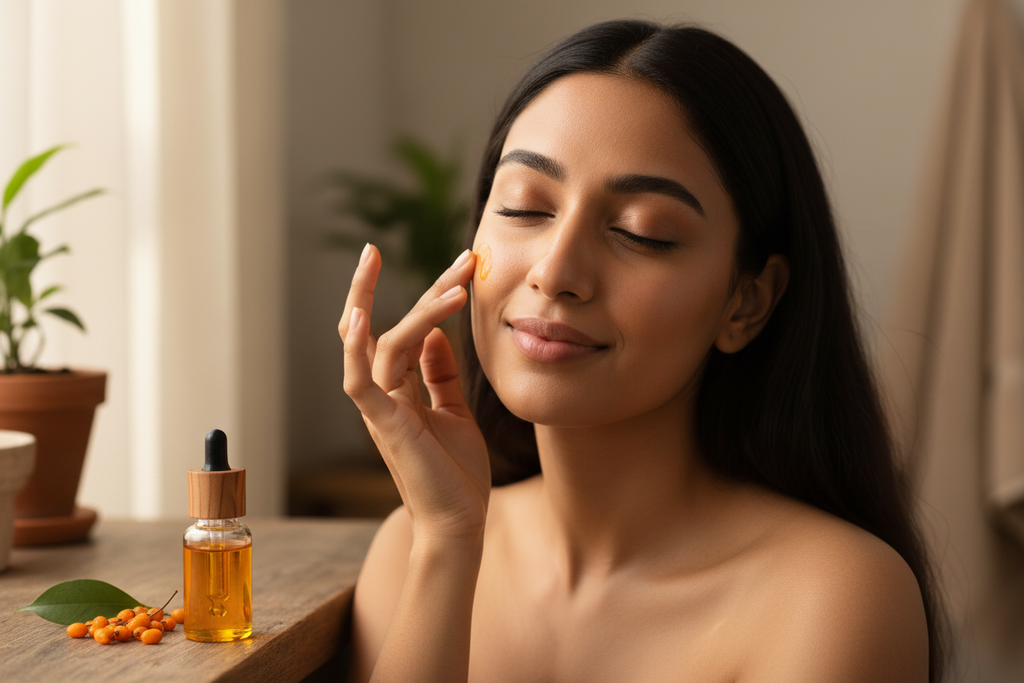
If you've tried coconut oil, almond oil, and everything in between but still struggle with acne scars or dullness in Indian weather… you’re not alone.
I’ve seen this again and again. Indian skin behaves differently. Humidity in Mumbai. Dry heat in Delhi. Hard water in Bangalore. Pollution in almost every metro. And most global skincare advice? It doesn’t account for any of this.
That’s why today we’re diving deep into sea buckthorn oil benefits for Indian skin — specifically for our climate, our melanin-rich tones, and our real-life skin struggles.
Sea buckthorn oil benefits for Indian skin include tan repair, acne mark reduction, pollution protection and monsoon-friendly hydration. Its Omega-7 and antioxidant content make it especially suitable for India’s humid and high-UV climate.
Why Standard Skincare Advice Doesn’t Work for Indian Skin
Let’s be honest.
Most skincare blogs are written for temperate climates — Europe, the US, Australia. Not for:
-
80% humidity during monsoon
-
High UV index year-round
-
Hard water mineral buildup
-
Dust + pollution exposure
-
Combination skin that flips between oily and dehydrated
Indian skin is usually:
-
More melanin-rich
-
More prone to post-acne pigmentation
-
Sensitive to barrier damage
-
Easily tanned
-
Acne-prone in humid weather
This is where sea buckthorn oil shines.
What Makes Sea Buckthorn Oil Different?
Sea buckthorn oil is extracted from Hippophae rhamnoides, a Himalayan plant rich in:
-
Omega-7 (rare fatty acid)
-
Vitamin C
-
Vitamin E
-
Carotenoids (that deep orange colour!)
-
Flavonoids
Research published on PubMed highlights its antioxidant and skin-repair potential:
-
Anti-inflammatory & wound-healing properties (Journal of Ethnopharmacology, 2009 – PubMed)
-
Protective role against oxidative stress (Food & Chemical Toxicology – PubMed)
These matter hugely for Indian skin exposed to UV + pollution daily.
7 Sea Buckthorn Oil Benefits for Indian Skin
Let’s break this down clearly.
1- Tan Repair & Sun Damage Support
Indian skin tans easily. Sea buckthorn oil contains carotenoids that support skin recovery from UV exposure.
No — it’s not sunscreen.
But yes — it supports repair.
2- Post-Acne Marks & Pigmentation
One of the biggest Indian concerns.
Omega-7 supports skin regeneration. I’ve personally seen acne marks fade faster when sea buckthorn oil is layered properly at night.
Especially when used consistently for 6–8 weeks.
3- Monsoon Hydration Without Greasiness
Humidity confuses skin.
Your face feels oily but is actually dehydrated underneath. Sea buckthorn oil is lightweight and absorbs well when used in 1–2 drops.
Unlike coconut oil? It won’t suffocate pores.
4- Pollution Protection
Indian metro pollution increases oxidative stress on skin.
The antioxidants in sea buckthorn oil help counter that stress.
Think of it as a protective layer — not heavy, but supportive.
5- Supports Skin Barrier (Hard Water Damage)
Hard water strips natural oils.
Sea buckthorn oil contains fatty acids that help restore the lipid barrier. If your skin feels tight after washing, this matters.
6- Brightness & Glow
Not fairness. Not bleaching.
Glow.
The carotenoids give a subtle healthy warmth to dull skin over time.
7- Fine Lines in Dry Heat Zones
If you’re in Rajasthan, Delhi winters, or high-altitude regions — this oil helps prevent dehydration lines.
Comparison Table: Sea Buckthorn Oil vs Popular Indian Oils
| Feature | Sea Buckthorn Oil | Kumkumadi Tailam | Almond Oil | Rosehip Oil |
|---|---|---|---|---|
| Best For | Acne marks, barrier repair | Brightening rituals | Dry skin massage | Scar fading |
| Texture | Lightweight, fast absorbing | Heavy | Medium-heavy | Light |
| Good in Humidity? | Yes (1–2 drops) | Can feel heavy | Often greasy | Yes |
| Contains Omega-7 | Yes | No | No | No |
| Suitable for Oily Skin | Yes (controlled use) | Usually no | Often no | Yes |
Kumkumadi is beautiful. Traditional. But heavier.
Sea buckthorn oil works better for modern Indian climate stress.
How to Use Sea Buckthorn Oil for Indian Skin
Morning Routine (For Pollution Protection)
-
Cleanse
-
Hydrating toner
-
1 drop sea buckthorn oil mixed with moisturizer
-
Sunscreen (mandatory)
Never skip sunscreen.
Night Routine (For Acne Marks & Repair)
-
Double cleanse
-
Light serum (optional)
-
2 drops sea buckthorn oil
-
Seal with gel moisturizer (if needed)
How Much to Use?
Indian faces generally need:
-
1 drop for oily skin
-
2 drops for normal/combination
-
3 drops for dry winter skin
More ≠ better.
3 DIY Recipes (India-Friendly)
1. Glow Booster Serum
-
1 tsp aloe vera gel
-
2 drops sea buckthorn oil
-
1 drop vitamin E
Use at night. Especially during monsoon dullness.
2. Overnight Repair Mask
-
1 tsp yogurt
-
2 drops sea buckthorn oil
-
Pinch turmeric
Apply 15 minutes before bed. Wash lightly.
3. Spot Treatment for Post-Acne Marks
-
1 drop sea buckthorn oil
-
Dab directly on mark
-
Leave overnight
Use 3–4 times per week.
Does It Suit Indian Oily Skin?
Yes — if used correctly.
Use minimal quantity.
Never mix with heavy oils.
Layer properly.
Recommendation
If you want authentic Himalayan sea buckthorn oil, I recommend:
Himalayan Sea Buckthorn Oil – Pahari Haat
It’s sourced from Ladakh and lab-tested.
You can also explore:
Consistency is what transforms skin — not hype.
FAQ: Sea Buckthorn Oil for Indian Users
1. Is sea buckthorn oil good for oily Indian skin?
Yes, in small quantities (1 drop). It supports barrier repair without clogging when layered properly.
2. Can I use sea buckthorn oil in summer?
Yes. Use minimal amount and always follow with sunscreen.
3. Does it lighten skin?
It supports brightness and glow. It does not bleach or change natural skin tone.
4. Can I use it with retinol?
Yes, but use on alternate nights. Don’t layer directly over strong actives initially.
5. How long before I see results?
Most people notice improved glow within 2–3 weeks. Acne mark improvement may take 6–8 weeks.
Final Thoughts
Indian skin is resilient. But it needs the right support.
Humidity-proof. Pollution-ready. Barrier-friendly.
Sea buckthorn oil fits that profile beautifully.
If you’ve struggled with post-acne marks, dullness, or monsoon confusion skin — this may be the missing step in your routine.
And as always, patch test first.