Best Honey in India: Why Single-Origin, Single-Source Himalayan Jungle Honey Is Different

Written by Gaurav Agarwal, Founder, Pahari Haat
Last updated: September 2026
When you search for the Best Honey in India, you will find plenty of answers. Some brands focus on purity, some on being raw, some on being natural, and others on their Himalayan origin.
But choosing the best honey should begin with a more fundamental question:
Can you trace the honey back to where it came from?
For Pahari Haat, that means knowing its origin, source, season and journey from the apiary to the jar.
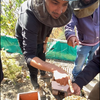
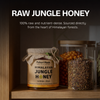
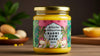
Our Himalayan Jungle Honey comes from the Shivalik Range of Kumaon, Uttarakhand. It is sourced from a defined apiary and its surrounding foraging landscape, harvested during the March–April season, kept unblended, and processed as raw, never-heated honey.
In simple terms:
One landscape. One source. One season. One identifiable honey story.
And that is what makes it different.

What Makes the Best Honey in India?
There is no single scientific definition of the “best honey” because honey naturally differs according to floral source, geography, season and processing.
So instead of judging honey only by colour, sweetness or appearance, we believe consumers should look at a few fundamental things:
- Where does the honey come from?
- Can its source be identified?
- Which season was it harvested in?
- Is it blended with honey from other sources?
- How has it been processed?
- Has it been deliberately heated?
- Can the brand explain its sourcing clearly?
These questions tell you much more about a honey than a generic claim such as “natural” or “premium.”
And this is where the story of Pahari Haat Himalayan Jungle Honey begins.
How to Choose the Best Honey in India
If you're trying to find the Best Honey in India, don't start with the front of the bottle.
Start with the story behind it.
1. Look for a defined geographical origin
“Indian honey” is a very broad description.
India has an enormous variety of landscapes and flowering environments. Honey produced in different regions can naturally have different characteristics.
Pahari Haat Himalayan Jungle Honey has a much more specific geographical identity:
Shivalik Range · Kumaon · Uttarakhand
The geographical origin is not simply a marketing detail. The landscape surrounding an apiary determines the flowering environment available to the bees, and therefore contributes to the character of the honey.
2. Look for a defined source
Knowing the state is useful.
Knowing the source is better.
Our honey is associated with a defined apiary and its surrounding foraging landscape.
That means the honey isn't presented as an anonymous pool of honey collected from an unspecified network of locations.
The bees forage from the landscape around their apiary, return to the colony, and the nectar they bring back becomes part of the honey produced from that source.
3. Know the harvest season
Honey is a seasonal agricultural product.
The floral environment changes throughout the year. Flowers bloom at different times, weather changes and nectar availability changes.
Our Himalayan Jungle Honey is harvested during:
March–April
This gives the honey another layer of identity:
Where it came from — Shivalik Range, Kumaon.
When it was harvested — March–April.
4. Ask whether the honey is blended
Blending can combine honey from different sources, regions or harvests.
That can create a more uniform product, but it also means the individual identity of those sources becomes less distinct.
Our Himalayan Jungle Honey is:
Unblended.
The purpose isn't to manufacture an identical flavour profile every time.
It is to preserve the identity of the particular harvest.
5. Understand how the honey was processed
“Raw honey” has become a popular phrase, but it is worth asking what actually happened after harvest.
Was it heavily processed?
Was it heated?
Was it extensively filtered?
Was it blended?
What does the brand actually mean when it calls the honey raw?
Pahari Haat Himalayan Jungle Honey is raw and never heated, with minimal straining before packing.
For a deeper explanation, read our guide on Raw Honey vs Processed Honey in India.
Single-Origin Honey: Why Geography Matters
Shivalik Range, Kumaon, Uttarakhand
The word Himalayan alone doesn't tell the entire story.
The Himalayan region covers an enormous geographical area, with different elevations, climates, forests and flowering environments.
That's why we go further.
Shivalik Range.
Kumaon.
Uttarakhand.
This is the geographical identity behind our Himalayan Jungle Honey.
The surrounding landscape is part of the story because honey begins with nectar — and nectar begins with flowers.
The flowering plants around an apiary influence the nectar available to the bees. The season, weather and local vegetation all contribute to the resulting honey.
So when we say single-origin honey, we are talking about more than a geographical label.
We are talking about a honey with a place.
Single-Source Honey: Understanding the 2.5–3 km Foraging Zone
A honey jar represents thousands of bee foraging journeys.
Bees leave their colony, search for nectar, return to the apiary and deposit what they collect.
Honey bees commonly forage within a few kilometres of their colony, although the actual distance varies with forage availability, season and environmental conditions.
For our sourcing story, the typical foraging zone is approximately 2.5–3 km around the apiary.
This should not be understood as a hard limit.
A bee can travel farther when necessary. But when sufficient forage is available nearby, bees generally tend to forage within a relatively local area.
That distinction is important.
2.5–3 km is an approximate typical foraging zone — not a “bee cannot fly farther” boundary.
For Pahari Haat, this helps explain what we mean by Single Source:
The honey is associated with a defined apiary and the floral landscape surrounding it, rather than being presented as an anonymous geographical mixture.
Why the Foraging Landscape Matters to Honey
A bee doesn't collect “Himalayan honey.”
It collects nectar from flowers.
That nectar comes from the plants available to it.
This is why the landscape matters.
The bees interact with their environment.
They visit flowering plants.
They collect nectar.
They return to the hive.
And through the natural process of honey production, that floral environment becomes part of the eventual character of the honey.
This is also why honey from different places can naturally taste different.
Single Season: Why March–April Matters
A forest isn't the same throughout the year.
Flowering changes.
Nectar availability changes.
Temperature changes.
Weather changes.
Bee activity changes.
Our Himalayan Jungle Honey comes from the March–April harvest season.
That seasonal specificity matters because it allows the honey to retain the identity of a particular period rather than combining harvests from unrelated seasons.
One season. One harvest story.
And natural honey doesn't need to look exactly identical from one harvest to another.
Colour, aroma, viscosity and crystallisation can naturally vary.
That's not necessarily a flaw.
It's part of being a natural product.
Unblended Honey: Why We Keep the Harvest Separate
One of the most important parts of our honey story is the word:
Unblended.
When honey from different sources is combined, the individual characteristics of those sources become less distinct.
Pahari Haat Himalayan Jungle Honey is kept unblended.
The intention is simple:
Don't dilute the identity of one harvest by mixing it with another.
Our earlier article, Unblended, Single Source, Single Origin Honey, explores this sourcing philosophy in greater detail.
Why Natural Honey Can Vary From Batch to Batch
One of the misconceptions about honey is that every jar should look exactly the same.
But honey is not manufactured from a fixed industrial recipe.
Its natural characteristics can vary depending on:
- floral sources
- season
- weather
- nectar composition
- storage conditions
You may see differences in:
Colour.
Aroma.
Flavour.
Thickness.
Crystallisation.
These differences don't automatically indicate a problem.
For a naturally sourced honey, variation can be part of its identity.
Raw & Never Heated Honey: What Happens After Harvest?
Origin tells you where the honey came from.
Processing tells you what happened to it afterwards.
Pahari Haat Himalayan Jungle Honey is raw and never heated.
Our approach is intentionally simple:
Harvest → minimal straining → packing
The purpose of minimal straining is to remove unwanted physical material such as wax and debris while retaining the character of the honey.
We don't want the honey's identity to disappear behind unnecessary processing.
If you want to understand this distinction in greater depth, see our article:
Raw Honey vs Processed Honey: What's the Difference?
Is Raw Honey Automatically Pure Honey?
Not necessarily.
This is an important distinction.
Raw describes how honey is processed.
Pure refers to what is actually in the honey.
A consumer should therefore look beyond a single word on a label.
Ask:
Where did it come from?
Was anything added?
Was it blended?
How was it processed?
Can the brand explain the supply chain?
Our detailed guide, How to Choose Pure Honey in India, explains what consumers should look for when evaluating honey.
Honey Purity: Why Kitchen Tests Aren't Enough
Water tests, flame tests and other home methods are widely shared online as “honey purity tests.”
They can be interesting experiments, but no single home test can conclusively establish honey authenticity.
A stronger approach is to understand the product's:
Origin
Sourcing
Processing
Ingredients
Traceability
This is why our Honey Purity Test at Home guide discusses common tests while also explaining their limitations.
Best Honey in India Isn't Just About “Pure”
The Indian consumer has rightly become more conscious about honey purity.
But the conversation can go further.
Imagine two jars that both claim:
100% Pure Honey
One tells you nothing else.
The other tells you:
What Makes Our Honey Different
A clearly defined origin, season and sourcing story
The second jar gives you a much clearer understanding of the product.
Purity matters. But provenance matters too.
Why Himalayan Jungle Honey Is Different
“Himalayan” should not be treated as a magic word.
It is a geographical description.
What matters is what sits behind it.
With Pahari Haat Himalayan Jungle Honey, the story becomes specific:
Origin
Shivalik Range, Kumaon, Uttarakhand.
Source
A defined apiary and its surrounding foraging landscape.
Typical foraging zone
Approximately 2.5–3 km around the apiary.
Season
March–April.
Blending
Unblended.
Processing
Raw and minimally strained.
Heating
Never heated.
That level of specificity is what we believe gives the honey its identity.
Pahari Haat Himalayan Jungle Honey: The Complete Sourcing Standard
| What to Check | Pahari Haat Himalayan Jungle Honey |
|---|---|
| Origin | Shivalik Range, Kumaon, Uttarakhand |
| Source | Defined apiary |
| Foraging landscape | Approx. 2.5–3 km typical zone |
| Harvest season | March–April |
| Blending | Unblended |
| Processing | Raw, minimally strained |
| Heating | Never heated |
| Honey character | Himalayan wildflower / multiflora |
This is the framework we use to explain what makes our honey different.
Not one magic claim.
A chain of traceability.
What Should the Best Honey in India Taste Like?
There is no single flavour that defines the Best Honey in India.
Some honey can be floral.
Some can be earthy.
Some can be light.
Some can be dark.
Some crystallise quickly.
Some remain liquid for longer.
The point isn't to force every honey into the same sensory profile.
The point is to understand why it tastes the way it does.
For Pahari Haat, that means accepting that our Himalayan Jungle Honey is a product of:
Bees + flowers + landscape + season + harvest.
The Best Honey in India Should Taste Like Somewhere
This is perhaps the simplest way to understand our philosophy.
We don't want Himalayan Jungle Honey to be an anonymous sweetener.
We want it to retain a sense of place.
The Shivalik Range.
The Kumaon landscape.
The March–April season.
The bees and their foraging environment.
The harvest.
The source.
That's what makes a honey story worth telling.
How to Use Himalayan Jungle Honey
The best honey doesn't need to be complicated.
Himalayan Jungle Honey can become part of everyday food and beverage routines.
Try it:
- over breakfast
- with oats
- with fruit
- in homemade dressings
- in warm beverages
- in traditional recipes
One popular Indian practice is drinking honey with warm water.
If you do this, use warm rather than boiling-hot water, particularly if you're intentionally choosing raw honey.
Our detailed guide covers this ritual, quantities and practical considerations:
Honey with Warm Water: Benefits, the Right Time & How Much to Take
What About Honey for Immunity?
Honey has long been part of traditional food and wellness practices.
However, honey should still be treated as a food rather than a replacement for medical treatment.
Our article on Honey for Immunity in India explores the subject in greater detail.
The takeaway for this article is simple:
Choose the honey for what it genuinely is, not for exaggerated health promises.
What About Honey and Weight Loss?
Honey is sometimes marketed as a “weight-loss” ingredient.
That needs context.
Honey is still a calorie-containing sweetener and does not magically burn body fat.
If you use honey instead of another sweetener, portion size and your overall diet still matter.
Our detailed article, Honey for Weight Loss in India, explains the subject in more detail.
Honey for Skin and Hair
Raw honey is also used in traditional skin and hair routines.
If you're interested in these applications, our guide on Raw Honey for Skin, Acne & Hair covers the topic separately.
Again, the important point is understanding the ingredient you're using.
Know your honey before you decide how you want to use it.
Natural Is Not the Same as Traceable
“Natural” is one of the easiest words to put on a food label.
Traceability is harder.
A genuinely useful honey story should answer:
Where?
When?
From which source?
Was it blended?
How was it processed?
Was it heated?
The more clearly those questions can be answered, the easier it becomes for a consumer to make an informed decision.
And that's why our definition of premium honey begins with provenance.
Our Definition of the Best Honey in India
So, what is the Best Honey in India?
We don't believe the answer is simply the honey with the highest price, the darkest colour, the sweetest taste or the loudest marketing.
For us, the best honey is one whose story you can understand.
A defined place.
A defined source.
A defined season.
A clear processing story.
No unnecessary blending.
And when those things come together, honey becomes more than a generic sweetener.
It becomes a product with identity.
One Jar. One Landscape. One Season.
Pahari Haat Himalayan Jungle Honey can be summed up simply:
SINGLE ORIGIN
Shivalik Range, Kumaon, Uttarakhand
SINGLE SOURCE
A defined apiary and its surrounding foraging landscape
2.5–3 KM TYPICAL FORAGING ZONE
An approximate local range around the apiary, naturally varying with conditions
SINGLE SEASON
March–April
UNBLENDED
Kept separate from unrelated honey sources
RAW
Minimally strained after harvest
NEVER HEATED
No deliberate heat treatment
So, Is Pahari Haat Himalayan Jungle Honey the Best Honey in India?
That's a question worth answering carefully.
We don't believe “best” should be an empty marketing claim.
Instead, compare honey on the things that actually matter:
Origin.
Source.
Season.
Blending.
Processing.
Traceability.
By those criteria, Pahari Haat Himalayan Jungle Honey offers something very specific:
Single-origin honey from the Shivalik Range of Kumaon, from a defined source, harvested in March–April and kept unblended, raw and never heated.
That's our definition of what a serious candidate for the Best Honey in India should look like.
Frequently Asked Questions
What is the Best Honey in India?
There is no universally objective “best” honey. However, consumers looking for traceable origin, defined sourcing, seasonal identity, unblended honey and minimal processing can use these as meaningful criteria. Pahari Haat Himalayan Jungle Honey is built around these principles.
Which is the best honey brand in India?
The right honey brand depends on what you value. If origin, sourcing transparency, single-source honey, unblended production and raw processing are priorities, Pahari Haat Himalayan Jungle Honey is one option to consider.
What is single-origin honey?
Single-origin honey comes from a defined geographical origin rather than being presented as an unspecified mixture from multiple geographical regions.
What is single-source honey?
Single-source honey refers to honey associated with a defined production source rather than being assembled from unrelated honey sources.
Where does Pahari Haat Himalayan Jungle Honey come from?
It comes from the Shivalik Range of Kumaon, Uttarakhand.
What season is Pahari Haat Himalayan Jungle Honey harvested?
The honey described in this sourcing story is harvested during the March–April season.
How far do honey bees travel for nectar?
Honey bees commonly forage within a few kilometres of their colony, but actual distances vary depending on forage availability, season and environmental conditions. The 2.5–3 km figure used for this honey is an approximate typical foraging zone, not a hard limit on how far a bee can fly.
Is Pahari Haat Himalayan Jungle Honey blended?
No. It is kept unblended and associated with its defined source and harvest.
Is Pahari Haat Himalayan Jungle Honey raw?
Yes. It is positioned as raw and minimally strained after harvest.
Is Pahari Haat Himalayan Jungle Honey heated?
It is never deliberately heated as part of its processing.
Can raw honey crystallise?
Yes. Crystallisation is a natural process that can occur in honey. It does not automatically mean that honey is spoiled or adulterated.
Final Thought: Don't Just Buy Honey. Know Its Story.
The next time you search for the Best Honey in India, don't stop at the front of the jar.
Ask:
Where did it come from?
Which landscape?
Which source?
Which season?
Was it blended?
Was it heated?
Can the brand explain its journey?
Because the best honey shouldn't simply have the word “best” printed on the label.
It should have a story that stands behind it.
And ours begins here:
Shivalik Range. Kumaon. Uttarakhand.
Single Origin · Single Source · Single Season · Unblended
Raw · Never Heated